For many print-on-demand sellers, the first stage of growth is usually about testing products, uploading designs, and finding a few items that start to sell.
But after that first stage, a bigger question appears:
How do you make your products feel less like basic custom merchandise and more like a real brand?
That is where embroidery becomes valuable.
Yoycol now supports custom embroidery, giving sellers, apparel brands, creators, and business buyers a new way to create products with a more premium look and stronger brand identity. Instead of relying only on printed graphics, sellers can now use embroidered logos, short text, badges, initials, and minimal designs to create apparel that feels more polished, durable, and brand-ready.
Embroidery is not just a decoration method. For many sellers, it can become a product strategy.
It helps turn simple apparel into something customers are more likely to keep, wear, gift, and associate with a brand.
Why Embroidery Matters for Custom Apparel Brands
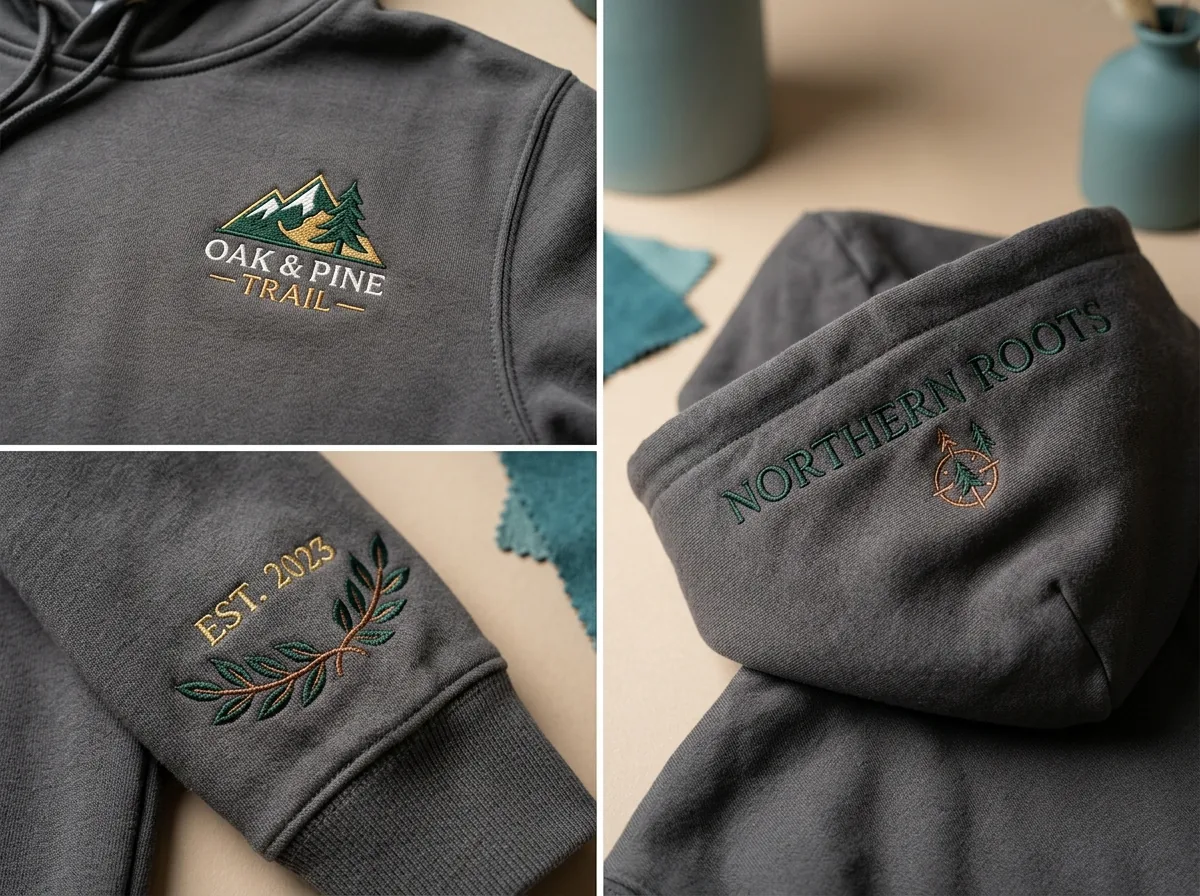
Not every custom apparel product needs to be loud.
Some of the strongest branded products are simple: a small logo on the chest, a stitched mark on a sleeve, a clean badge on a hoodie, or a short phrase placed carefully on a cap.
That is exactly where embroidery works well.
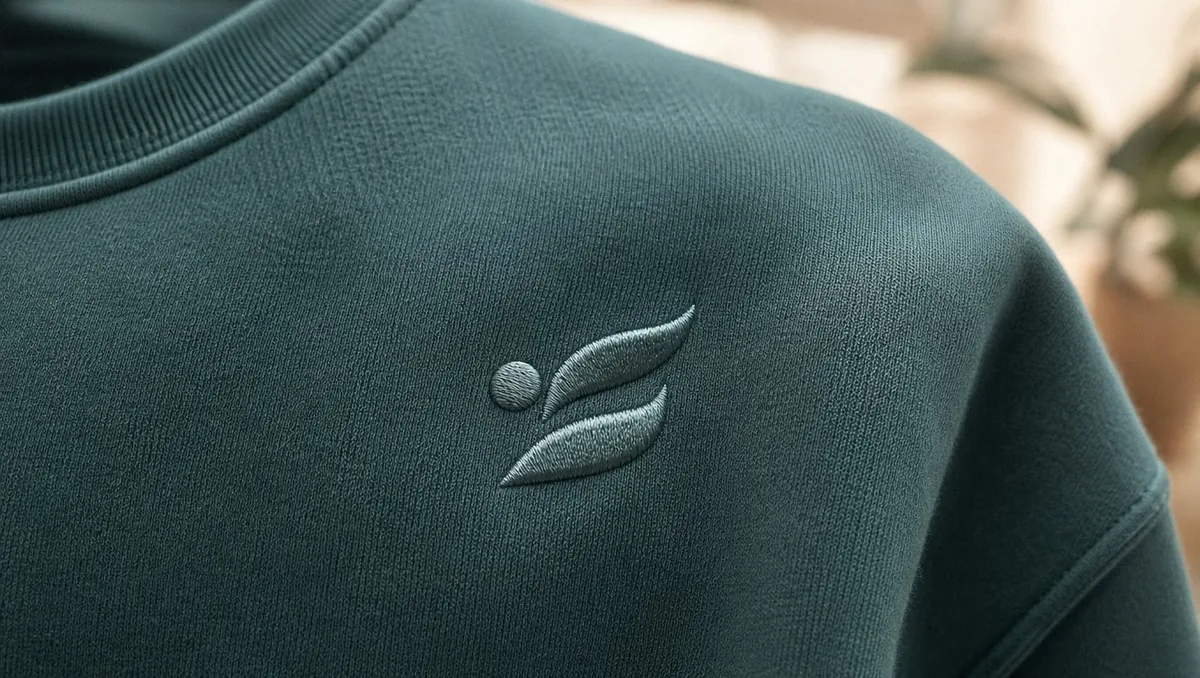
Compared with standard printing, embroidery adds texture. It creates a raised, stitched finish that people can see and feel. This makes it especially useful for brands that want their products to look more established, more premium, or more suitable for everyday wear.
For print-on-demand sellers, this matters because customers do not judge a product only by the design. They also notice the details.
They notice whether the logo looks clean.
They notice whether the product feels like a brand piece.
They notice whether the item looks durable enough to wear again and again.
Embroidery helps improve that perception.
It is especially useful for:
-
Apparel brands building a recognizable logo
-
Shopify sellers launching premium product lines
-
Etsy sellers offering personalized products
-
Creators selling subtle, wearable merch
-
Businesses ordering staff uniforms or team apparel
-
Clubs, events, gyms, schools, and communities that need branded clothing
-
Private label sellers who want a more professional product finish
In other words, embroidery is a strong fit when the product needs to carry identity, not just decoration.
Embroidery vs Printing: Which One Should Sellers Use?
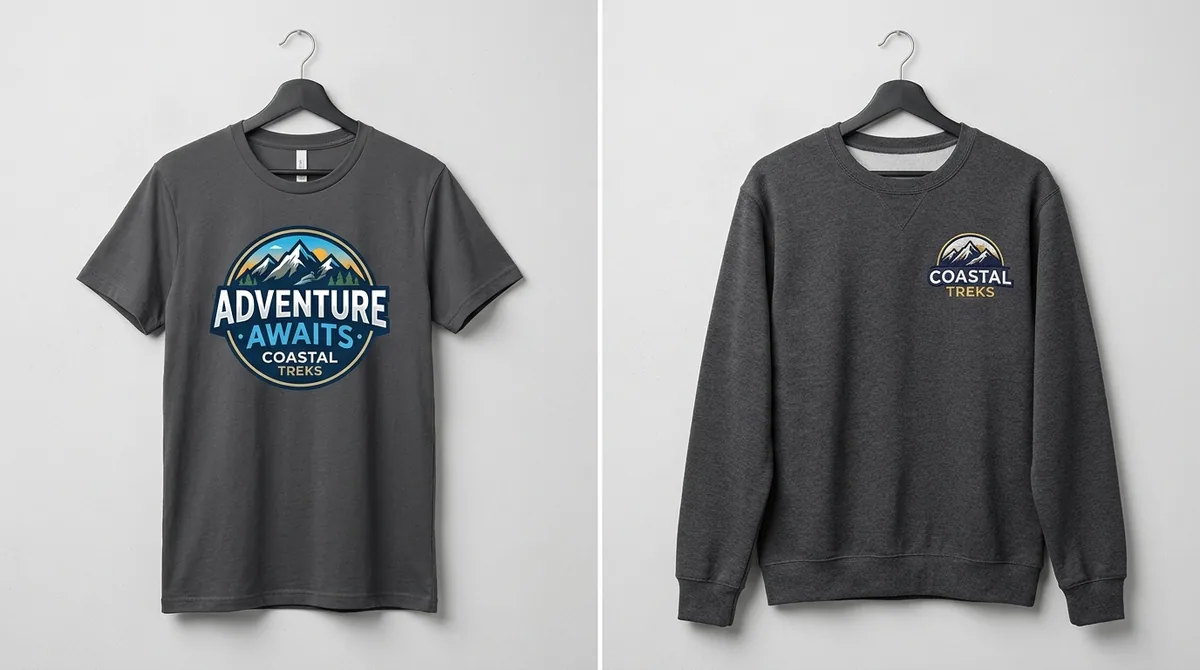
Embroidery and printing are not always competing with each other. They are better for different product goals.
Printing is usually the better choice for large artwork, colorful graphics, gradients, photo-style designs, and all-over print patterns. If your design depends on rich color, large coverage, or complex details, printing will often be the right option.
Embroidery is different. It works best when the design is clean, simple, and brand-focused.
Logos, short text, icons, initials, badges, and minimal artwork often look better when stitched. Embroidery gives these designs more weight and texture, making them feel less like a graphic and more like a product detail.
A simple way to think about it:
Use printing when the artwork is the main visual story.
Use embroidery when the brand mark is the product detail.
For example, a colorful all-over print shirt should usually be printed. But a hoodie with a small logo on the chest, a polo shirt for a business team, or a cap with a stitched brand mark can be a much better fit for embroidery.
This distinction is important because the decoration method affects how customers understand the product.
A printed graphic tee may feel casual and trend-driven.
An embroidered hoodie or polo can feel more premium and brand-led.
That difference can influence pricing, positioning, and the type of customer you attract.
What Types of Designs Work Best for Embroidery?
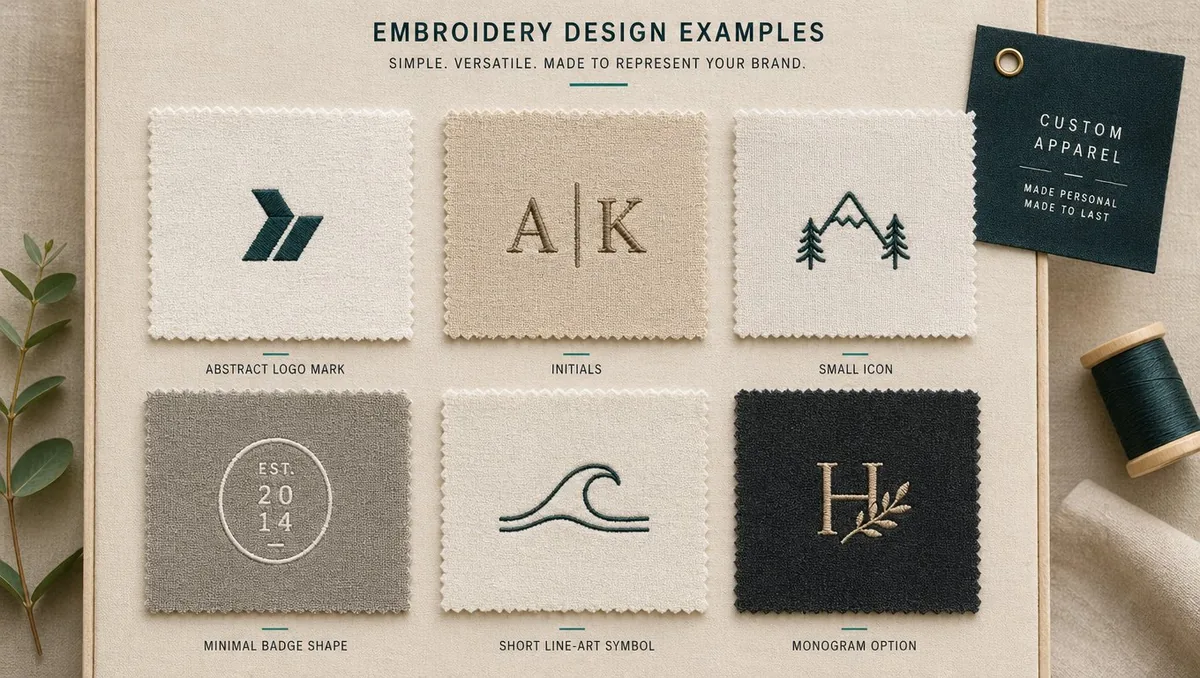
Embroidery works best when the design is clean, readable, and not too complex.
If you are preparing a design for embroidery, start with clear shapes and strong contrast. Tiny text, detailed illustrations, heavy gradients, and photo-style images may not translate well into thread.
Good embroidery design ideas include:
-
Brand logos
-
Initials or monograms
-
Short words or phrases
-
Simple icons
-
Club or team names
-
Minimal line artwork
-
Small chest designs
-
Sleeve marks
-
Business logos
-
Event badges
-
Creator signatures or symbols
For sellers, one of the best ways to use embroidery is to build a small product collection around one strong identity.
Instead of uploading many unrelated designs, a brand could create a focused embroidered collection with a logo hoodie, a matching sweatshirt, a cap, and a polo shirt. This kind of collection feels more like a real brand system.
It also makes the store easier for customers to understand.
Rather than seeing random products, visitors see a clear product line.
How Embroidery Can Help Sellers Increase Product Value
One of the biggest advantages of embroidery is perceived value.
Customers often associate embroidery with quality, especially when it is used on apparel such as hoodies, sweatshirts, polos, jackets, workwear, hats, and branded uniforms.
A small embroidered logo can make a product feel more finished than the same item with a basic printed mark.
This can help sellers in several ways.
First, embroidery can support premium pricing. If a product feels more durable and more brand-focused, customers may be more willing to pay more for it.
Second, embroidery can make products feel less seasonal. A funny printed tee may sell during a short trend, but a clean embroidered logo hoodie can stay relevant for much longer.
Third, embroidery is useful for business buyers. Companies, teams, gyms, restaurants, schools, events, and local brands often need apparel that looks professional. For these customers, embroidery is easy to understand because it directly supports branding.
For Yoycol sellers, this opens up more than just another product option. It creates a path toward higher-value use cases, such as:
-
Corporate apparel
-
Staff uniforms
-
Team clothing
-
Branded merchandise
-
Event apparel
-
Creator merch
-
Private label clothing
-
Boutique fashion basics
-
Personalized gifts
-
Club and community apparel
That is why embroidery should not be treated as a small product update. It can become a new selling angle.
Best Use Cases for Custom Embroidery

If you are deciding whether embroidery is right for your store, here are several product directions worth testing.
1. Logo Apparel for Small Brands
Small brands often need simple, clean products that make their logo visible without looking too promotional.
An embroidered logo on a hoodie, sweatshirt, polo, jacket, or cap can help a young brand look more established. This is especially useful for businesses that sell offline, attend events, ship customer gifts, or build a community around their brand.
For many small brands, embroidered apparel can become part of the brand experience.
It is not just something to sell. It can also be used for staff, partners, creators, ambassadors, and loyal customers.
2. Creator and Influencer Merch
Many creator merch products rely on bold printed graphics. That can work well, but not every fan wants a loud design.
Embroidery allows creators to offer more subtle merch. A small stitched symbol, name, phrase, or icon can make the product easier to wear every day.
This gives creators a way to reach customers who prefer low-key apparel.
A simple embroidered hoodie, cap, or sweatshirt can feel more wearable than a large graphic design. That can help improve repeat use and customer satisfaction.
3. Corporate and Team Apparel
For business customers, embroidery is a natural fit.
A company logo on a polo shirt, sweatshirt, jacket, or cap can be used for staff uniforms, trade shows, team events, customer gifts, or office wear.
These buyers usually care about consistency and professionalism. Embroidery helps provide both.
If your store serves B2B customers, embroidered products can also support quote-based orders. Instead of selling only one-off products, sellers can create custom apparel solutions for teams, companies, and organizations.
4. Personalized Gifts
Embroidery also works well for personalization.
Initials, names, dates, short messages, and simple symbols can make products feel more personal. Sellers can use this for gift-focused collections, couple products, family apparel, club items, or event merchandise.
Personalized embroidered products can be especially useful around holidays, weddings, graduations, corporate events, and team activities.
5. Premium Basics
Not every product needs a complicated design.
A plain hoodie with a small embroidered logo can sometimes feel more premium than a graphic-heavy product. For apparel brands that want a cleaner look, embroidery can help build a more mature product line.
Premium basics are also easier to style, easier to wear, and often suitable for a wider audience.
For sellers, this means embroidery can help create products that are not tied to one short-lived trend.
How Shopify Sellers Can Use Embroidery
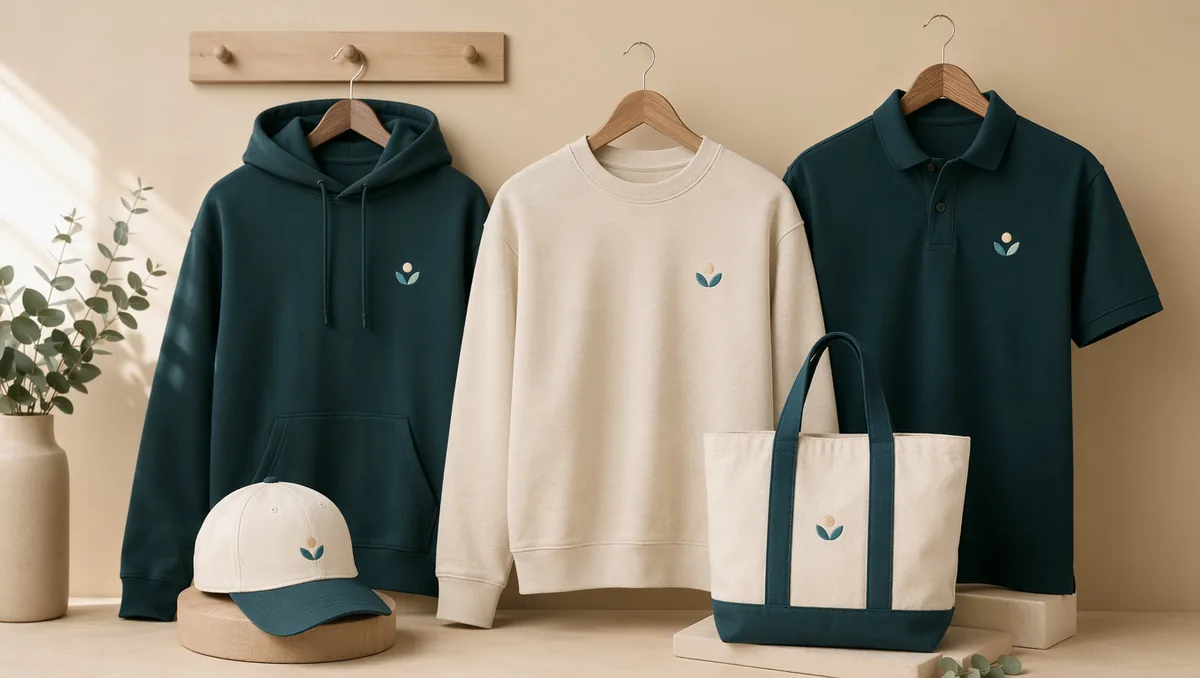
For Shopify sellers, embroidery can be used in several practical ways.
One approach is to create a premium collection inside your store. Instead of mixing embroidered products with every other item, create a dedicated collection such as:
-
Embroidered Essentials
-
Premium Logo Apparel
-
Custom Embroidered Collection
-
Branded Apparel
-
Team & Business Apparel
This helps customers understand that these products are different from standard printed items.
Another approach is to use embroidery for brand-building products. If your store has a recognizable logo, mascot, phrase, or community symbol, embroidery can turn that identity into wearable products.
A third approach is to target business buyers.
Shopify sellers can create landing pages for company apparel, team clothing, event merch, or custom logo products. These pages can include quote forms, sample requests, or bulk order inquiries.
For B2B sellers, this is especially important.
Embroidery is not only about adding a new item to the catalog. It can help attract customers who need custom apparel for real business use.
If you sell to businesses, teams, creators, or organizations, embroidery can make your offer easier to explain:
Send us your logo.
Choose your product.
Create branded apparel for your team, store, or event.
That is a clear value proposition.
How to Prepare Your Design for Embroidery
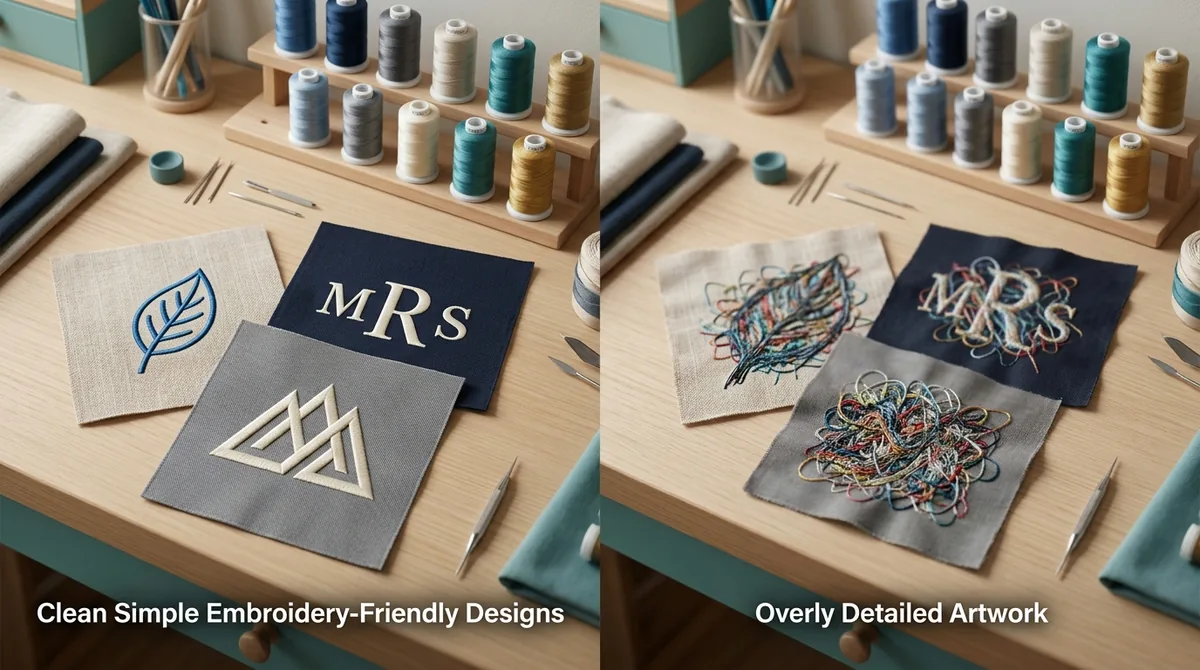
Before creating an embroidered product, it is worth checking whether the design is suitable for stitching.
A design that looks great on a screen may not always work well as embroidery. Thread has texture, thickness, and physical limits. That is why clean artwork usually performs better.
Here are a few practical tips:
-
Keep the design simple
-
Avoid tiny text
-
Use strong contrast
-
Choose clear shapes
-
Avoid photo-style images
-
Do not rely on gradients
-
Make sure the logo is readable at the final size
-
Test placement before launching the product
-
Consider creating a simplified version of your logo for embroidery
If your design has too many small details, it may be better to simplify it.
Many brands use one logo version for websites and digital channels, and another cleaner version for embroidery. This is normal. A good embroidery design is not always the same as a good printed graphic.
For example, a detailed full-color logo may work well on a website, but a simplified one-color version may look much better when stitched on apparel.
Why Embroidery Fits Print-on-Demand Growth
Print-on-demand has made it easier for sellers to launch products without holding inventory. But as more sellers enter the market, basic custom products become easier to copy.
To grow, sellers need more than more designs.
They need better product positioning.
Embroidery can help with that.
It gives sellers a way to create products that feel more brand-led, more durable, and more suitable for higher-value customers. It also helps stores move beyond trend-based designs and into products that customers may wear repeatedly.
For Yoycol sellers, embroidery can be especially useful when combined with business-focused use cases such as:
-
Custom apparel fulfillment
-
Shopify store selling
-
Brand merchandise
-
Private label apparel
-
Business uniforms
-
Team clothing
-
Creator merch
-
Quote-based custom orders
A seller can start with one embroidered logo product, test customer response, and then expand into a full collection if it performs well.
That is a practical way to grow: test small, learn from real buyers, then scale the products that fit your audience.
How to Start Custom Embroidery with Yoycol
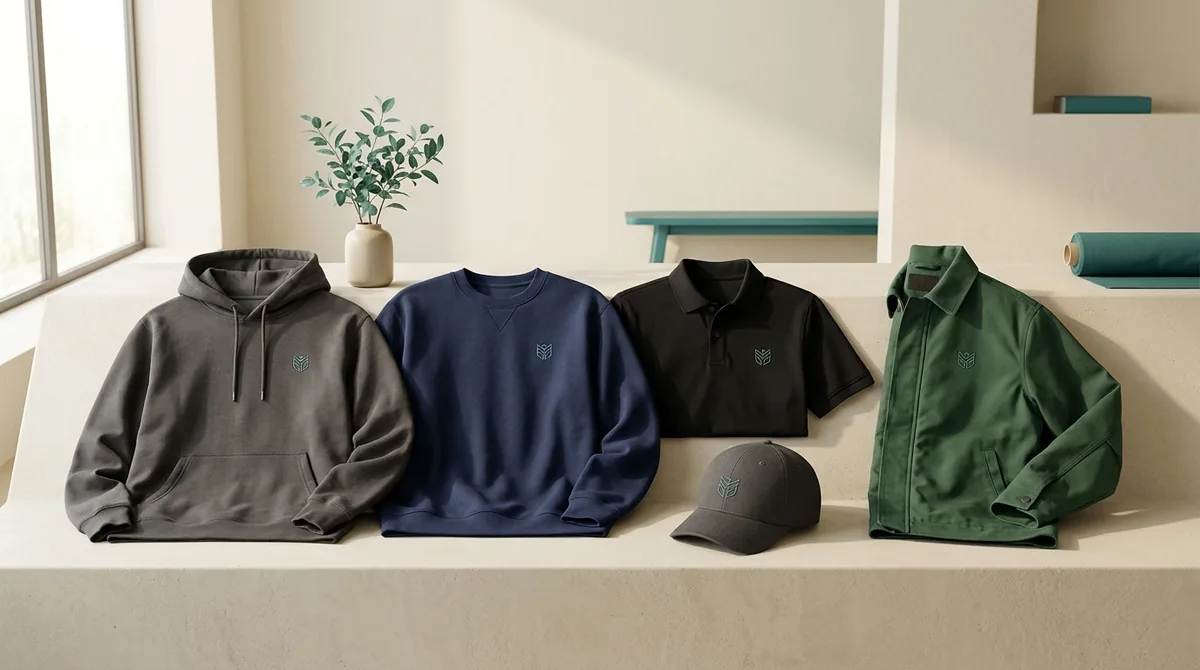
If you want to launch embroidered products, start by choosing the right product and design.
A simple process could look like this:
-
Choose an embroidery-supported product
-
Prepare a clean logo, text, or artwork file
-
Select the embroidery placement
-
Check whether the design is suitable for stitching
-
Order a sample if needed
-
Add the product to your store
-
Test it with your audience or business buyers
If you are selling through Shopify, you can position embroidered products as a premium collection, a logo apparel line, or a business customization service.
If you serve B2B customers, you can also use embroidery to support quote-based orders for teams, events, corporate apparel, and private label projects.
Yoycol helps sellers turn custom embroidery ideas into real products that can be sold online, used by teams, or ordered by business customers.
Whether you are building your own apparel brand or helping customers create branded merchandise, embroidery gives you another way to create products with a more professional finish.
Embroidery Is a Product Strategy, Not Just a Decoration
The most common mistake sellers make is treating embroidery as just another product option.
It is more useful than that.
Embroidery can change how customers understand your apparel. It can make a simple item feel more premium. It can help a logo feel more like a brand. It can make custom products more suitable for business buyers, teams, creators, and repeat customers.
For print-on-demand sellers, this creates a valuable opportunity.
You do not need to replace printed products. You can use embroidery alongside printing to build a stronger product mix.
Printed products can carry bold artwork, seasonal ideas, and colorful graphics.
Embroidered products can carry brand identity, premium basics, team apparel, and business-ready products.
Together, they give sellers more ways to serve different customers.
Final Thoughts
Custom embroidery gives print-on-demand sellers a practical way to upgrade their apparel line.
It works especially well for logos, minimal designs, team apparel, creator merch, business uniforms, and premium basics. For sellers who want to build a stronger brand, attract higher-value customers, or offer more professional custom products, embroidery is worth testing.
Yoycol’s custom embroidery service helps sellers create apparel that feels more branded, more polished, and more ready for real-world use.
If you are planning your next product collection, consider starting with one simple embroidered design. A small logo, placed well, can sometimes say more about your brand than a large graphic ever could.
Ready to create custom embroidered apparel for your store or business?
Start with Yoycol and turn your logo, idea, or brand identity into products your customers will want to wear.
FAQ
What is custom embroidery?
Custom embroidery is a decoration method that uses thread to stitch a logo, text, icon, or design onto apparel. It creates a raised, textured finish that is often used for branded clothing, uniforms, hats, hoodies, polos, and premium merchandise.
Is embroidery better than printing?
Embroidery is not always better than printing. It depends on the design and product goal. Printing is better for large, colorful, or detailed artwork. Embroidery is better for logos, short text, simple icons, and products that need a more premium or professional look.
Can I use embroidery for print-on-demand products?
Yes. Embroidery can be used for print-on-demand products when the selected product supports embroidery and the design is suitable for stitching. It is a good option for sellers who want to create logo apparel, branded merch, team clothing, or premium basics.
What designs work best for embroidery?
Simple designs work best for embroidery. Logos, initials, short words, clean icons, badges, and minimal artwork usually perform better than detailed illustrations, gradients, or small text.
Is embroidery good for Shopify sellers?
Yes. Shopify sellers can use embroidery to create premium product collections, branded apparel, business merchandise, creator merch, and custom logo products. It can also help sellers target B2B customers who need team apparel, uniforms, or event clothing.
How do I start selling embroidered products with Yoycol?
Start by choosing an embroidery-supported product, preparing a clean design, selecting the placement, and checking whether the artwork is suitable for stitching. You can then create samples, publish products to your store, or use embroidered apparel for quote-based business orders.