Choosing the best platform for your online store is important, especially when considering the debate of WooCommerce vs Shopify. Both are popular options, each with special features. WooCommerce is used by over 6 million websites and has 20.1% of the ecommerce market. Shopify is close behind, powering 4.6 million sites and holding 29% of the market.
When it comes to WooCommerce vs Shopify, WooCommerce allows you to fully customize your website, making it great if you enjoy tech or need flexibility. On the other hand, Shopify makes things easier, which is perfect for growing your store without tech worries. Whether you want control or ease, one of these platforms will work for you.
Overview of WooCommerce vs Shopify
What is WooCommerce?
WooCommerce is a tool that turns WordPress into an online store. It’s open-source, so you can change your store’s design and features. If you like working on websites or need special options, WooCommerce is a great pick. Many businesses already using WordPress choose WooCommerce.
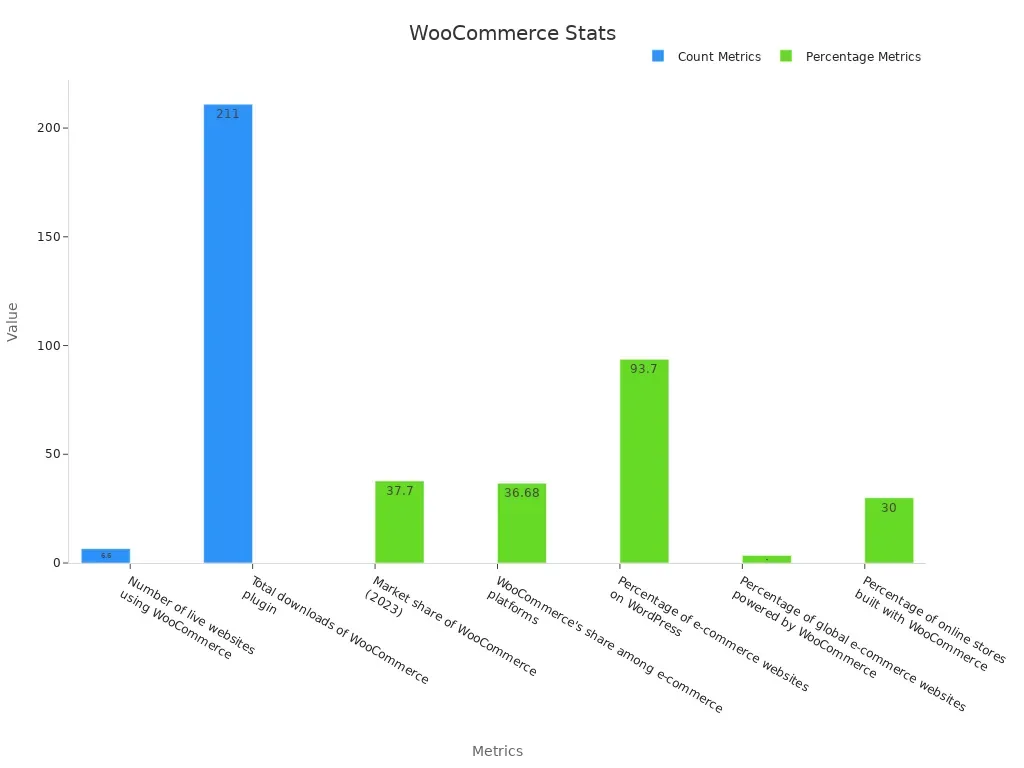
Now, WooCommerce runs over 6.6 million websites and holds 37.7% of the ecommerce market. It’s popular for businesses wanting control and flexibility.
What is Shopify?
Shopify is a platform that makes building online stores simple. Unlike WooCommerce, Shopify handles hosting and technical stuff for you. It’s great if you want to focus on selling without worrying about tech.
Shopify is easy to use, even for beginners. It has tools for marketing, managing products, and handling payments. As your business grows, Shopify helps you expand your store easily.
Shopify now powers over 4.6 million websites and holds 29% of the ecommerce market. Its simplicity and helpful support make it a favorite for people who want an easy setup.
WooCommerce vs. Shopify: Key Comparisons

Pricing Models
WooCommerce and Shopify have different pricing styles. WooCommerce is free to download, but you pay for hosting, a domain, and extra plugins. A basic WooCommerce store costs about $369 yearly. A fully-featured store can cost over $1,000 per year. Transaction fees are usually 2.9% + $0.30 per sale, depending on the payment method.
Shopify uses subscription plans that include hosting and support. Here’s a simple look at Shopify’s pricing:
Platform | Plan Type | Monthly Cost | Transaction Fees (if applicable) |
|---|---|---|---|
Shopify | Starter | $5 | N/A |
Shopify | Basic | $39 | 2% |
Shopify | Shopify | $109 | 1% |
Shopify | Advanced | $399 | 0.5% |
Shopify | Plus | $2,000 | N/A |
Shopify’s pricing is simple and includes everything. WooCommerce gives more control over costs but needs technical skills.
Customization Options
WooCommerce is great for customization. It’s open-source, so you can change anything you want. There are thousands of plugins and themes to make your store unique. You can add features like search filters or print-on-demand tools.
Shopify also allows customization but is simpler. Its App Store has many tools for email marketing or inventory management. While Shopify is easy to use, WooCommerce offers more flexibility. If you like tech and want full control, WooCommerce is better.
Ease of Use
Shopify is easier to use. Its design helps you set up a store quickly. Adding products and managing orders is simple. Shopify also handles hosting and security, so you don’t worry about tech issues.
WooCommerce takes more effort. You need to install WordPress, find hosting, and set up plugins. This gives more control but can be hard for beginners. If you want an easy setup, Shopify is the best choice.
Marketing Tools
Both platforms have good marketing tools but work differently. WooCommerce works well with WordPress for blogging and content marketing. Plugins help with email campaigns, analytics, and SEO.
Shopify has built-in tools like cart recovery, discount codes, and social media links. Shopify is easier for quick campaigns, but WooCommerce allows advanced strategies.
SEO Capabilities
SEO helps bring visitors to your store. WooCommerce is great for SEO. You can control meta descriptions, URLs, and content. This helps your store rank higher in search results.
Shopify also has good SEO features like fast loading and mobile-friendly designs. But it limits URL customization. If SEO is very important, WooCommerce might be better.
Integrations and Plugins
WooCommerce has many plugins for customization. You can add tools for analytics or print-on-demand services. This makes it easy to create a store that fits your needs.
Shopify’s App Store also has many apps for extra features. These apps help with tasks like inventory or customer support. Shopify is great, but WooCommerce offers more flexibility.
Scalability
Scalability means growing your store as your business grows. Shopify adjusts automatically to handle more traffic and sales. It’s great for busy times like holidays or product launches.
WooCommerce depends on your hosting provider. With good hosting, it can handle big stores and lots of traffic. But you’ll need to manage server performance. If you want less work, Shopify is a better choice.
Support and Resources
Shopify has 24/7 support through chat, email, and phone. It also has guides and forums to help with questions. If you need help, Shopify’s team is ready.
WooCommerce relies on online guides and community forums. There’s no dedicated support team. If you’re okay solving problems yourself, WooCommerce works. Otherwise, Shopify’s support might suit you better.
Pros and Cons of WooCommerce vs Shopify

WooCommerce Pros
WooCommerce is great for flexibility and control. It’s open-source, so you can change almost anything. You can adjust designs or add special features easily. This makes it perfect if you know tech or have a developer. It also works well with WordPress, which is ideal for stores with lots of content.
Another benefit is managing costs. WooCommerce is free, and you only pay for extras like hosting or plugins. This is helpful for small businesses that want to grow slowly. Its SEO tools are excellent too. You can improve URLs, meta descriptions, and content to rank higher in search results.
WooCommerce Cons
WooCommerce’s customization comes with some challenges. You’ll need tech skills or a developer for advanced changes. Developers can cost $50 to $200 per hour. Bad hosting can slow your site, which may hurt sales. If your store gets very big, you’ll need extra work to keep it running well.
Support is another downside. WooCommerce doesn’t have a support team. You’ll rely on forums and guides, which can be tricky. There are over 1,200 open issues on GitHub, so help might be slow. If you need quick support, WooCommerce might not be the best choice.
Shopify Pros
Shopify is simple and easy to use. You don’t need tech skills to set up a store. Hosting and security are included, so you can focus on selling. Shopify has tools like cart recovery and mobile-friendly designs to boost sales. Stores switching to Shopify often see sales grow by 60%.
Shopify is also great for growing businesses. It handles more traffic automatically, which is useful during busy times. Its SEO tools and mobile designs help increase revenue. In early 2024, Shopify made $1.9 billion, showing how good it is for online sales.
Shopify Cons
Shopify’s ease of use comes with higher costs. Plans start at $39 per month, and transaction fees add up. Customization is limited too. Less than 1% of users choose custom themes, so many stores look alike. Custom themes can improve sales but cost more upfront.
If you want full control, Shopify might feel limiting. Its App Store has many tools, but it’s less flexible than WooCommerce. For businesses needing unique designs, Shopify may not be the best option.
Recommendations for Choosing Between WooCommerce and Shopify
When WooCommerce is the Best Choice
WooCommerce is great if you want full control. You can change designs and add special features easily. It’s open-source, so you can customize everything to fit your ideas. Whether it’s a unique layout or advanced tools, WooCommerce lets you make it happen.
If you’re on a budget, WooCommerce is a smart pick. The platform is free, and you only pay for hosting, a domain, and extra plugins. This makes it affordable, especially for small businesses or those starting out. You can grow your store at your own pace without paying monthly fees.
WooCommerce also has many plugins for different needs. These tools help with SEO, marketing, and managing products. You can add features like special payment options or product suggestions. There’s likely a plugin for whatever your store needs.
Here’s when WooCommerce is a good choice:
You want full control over your store’s look and features.
You need a budget-friendly option to start or grow slowly.
You want lots of tools and integrations for your store.
You’re familiar with WordPress or have a developer to help.
If you want flexibility and control, WooCommerce is a great option.
When Shopify is the Best Choice
Shopify is perfect if you want an easy way to build a store. It’s simple to use, so you don’t need tech skills. Shopify takes care of hosting, security, and updates. This lets you focus on selling your products without worrying about technical stuff.
If your business is growing, Shopify is a great choice. It handles more traffic and sales automatically. Whether it’s a big sale or a new product launch, Shopify keeps your store running smoothly. You won’t need to manage servers or worry about downtime.
Shopify also has excellent customer support. You can get help anytime with their 24/7 service. This is helpful if you’re new to online stores or don’t have a tech team. Shopify’s built-in tools, like cart recovery and mobile-friendly designs, make selling easier and improve customer experience.
Here’s when Shopify is a good fit:
You want a simple setup without tech problems.
You need a platform that grows with your business.
You value strong customer support and built-in tools.
You prefer an all-in-one solution with hosting included.
If you want simplicity, growth, and support, Shopify is the better choice.
Scale Your Ecommerce Business with Yoycol
Optimize your Shopify or WooCommerce store by integrating Yoycol’s print-on-demand platform. This partnership enables global reach through localized production in 30+ countries, reducing shipping costs and delivery times while minimizing environmental impact.
Yoycol’s model lets you:
Expand product offerings without inventory risks
Cut logistics expenses via regional production hubs
Maintain sustainability with shorter shipping routes
Automate order fulfillment and focus on business growth while Yoycol handles printing and global distribution. Join a network of creators leveraging efficient, eco-conscious POD solutions to serve international markets effectively.
Deciding between WooCommerce and Shopify depends on your store's needs. WooCommerce lets you customize everything, which is great for flexibility. It’s best if you have tech skills or want more control. Shopify makes things simple with built-in tools, ideal for beginners or growing businesses.
Here’s a quick summary:
WooCommerce is great for small businesses and saving money.
Shopify is better for growth, dropshipping, and helpful support.
Think about your budget, goals, and how much tech work you can handle. This will help you choose the best platform for your store.