Choosing the right fabric for sublimation printing isn't just about preference — it's about profit.
The wrong fabric choice can lead to dull colors, faded prints, customer complaints, and returns. The right fabric choice means vibrant, durable prints that keep customers coming back.
But here's the problem: most sublimation fabric guides are written for hobbyists, not POD sellers. They don't tell you which fabrics are actually available through POD suppliers, which ones have the best profit margins, or which ones customers actually want to buy.
This guide fixes that. We'll cover:
- The #1 rule for sublimation fabric (and why it matters)
- The best fabric types ranked by performance and profit
- Polyester content requirements (and what happens if you go lower)
- Common fabric mistakes that kill your prints
- How to choose the right fabric for your specific products
If you're new to sublimation printing, our sublimation vs DTG guide explains the technology. And if you want to understand the full sublimation process, our dye sublimation guide covers everything from start to finish.
The #1 Rule: Polyester Content Is Everything
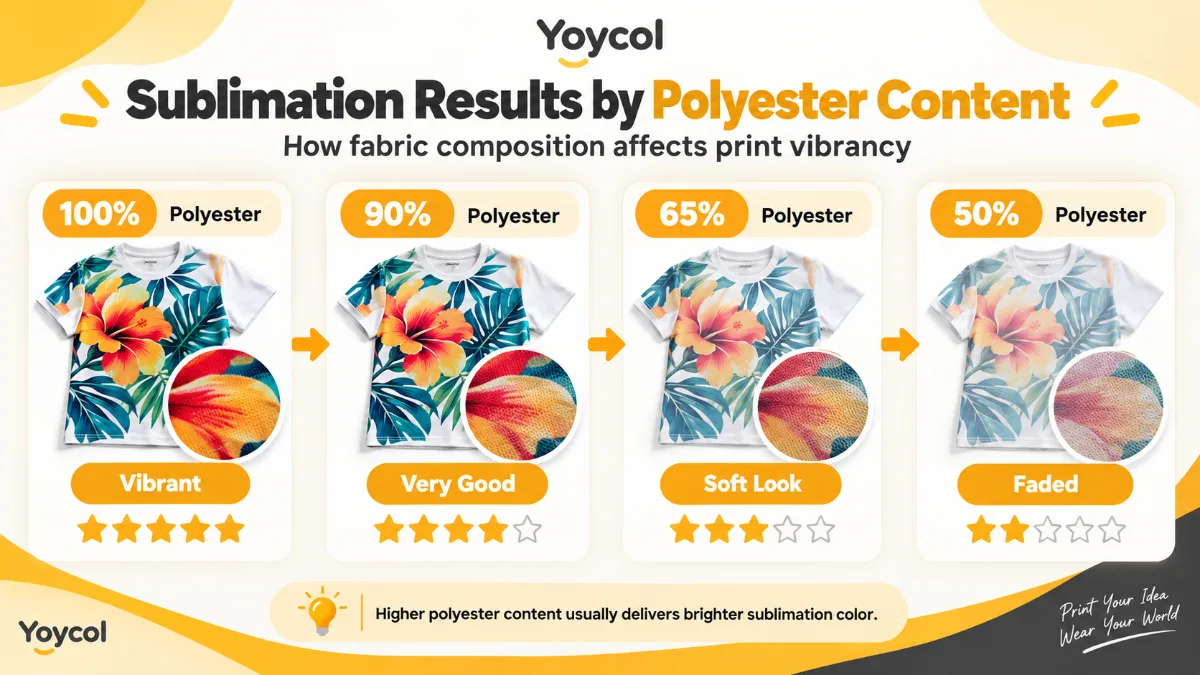
Before we dive into specific fabrics, you need to understand the single most important factor in sublimation printing: polyester content.
Here's why: Sublimation ink doesn't bond to cotton, wool, or other natural fibers. It only bonds to polyester fibers at a molecular level. When you heat-press sublimation ink onto fabric, the ink turns into gas and penetrates the polyester fibers, creating a permanent bond.
This means:
- 100% polyester = brightest, most vibrant, most durable prints
- 65% polyester / 35% cotton = good prints, slightly muted, vintage look
- 50% polyester / 50% cotton = acceptable prints, noticeably faded
- Below 50% polyester = poor results, ink washes out quickly
The Polyester Content Sweet Spot
For POD sellers, here's the practical breakdown:
| Polyester Content | Print Quality | Hand Feel | Best For |
|---|---|---|---|
| 100% polyester | Excellent (vibrant, sharp) | Slightly synthetic | Performance wear, bold designs |
| 90-95% polyester | Very Good | Soft with slight stretch | Most apparel, good balance |
| 65-80% polyester | Good (vintage look) | Soft, cotton-like | Fashion apparel, muted designs |
| 50-65% polyester | Fair (faded look) | Very soft | Not recommended for POD |
| Below 50% | Poor | N/A | Avoid for sublimation |
The sweet spot for POD sellers: 90-95% polyester. This gives you excellent print quality while maintaining a soft, comfortable hand feel that customers love.
For a deeper dive into sublimation on different fabrics, our sublimation on polyester guide explains the science.
The 5 Best Fabrics for Sublimation (Ranked)
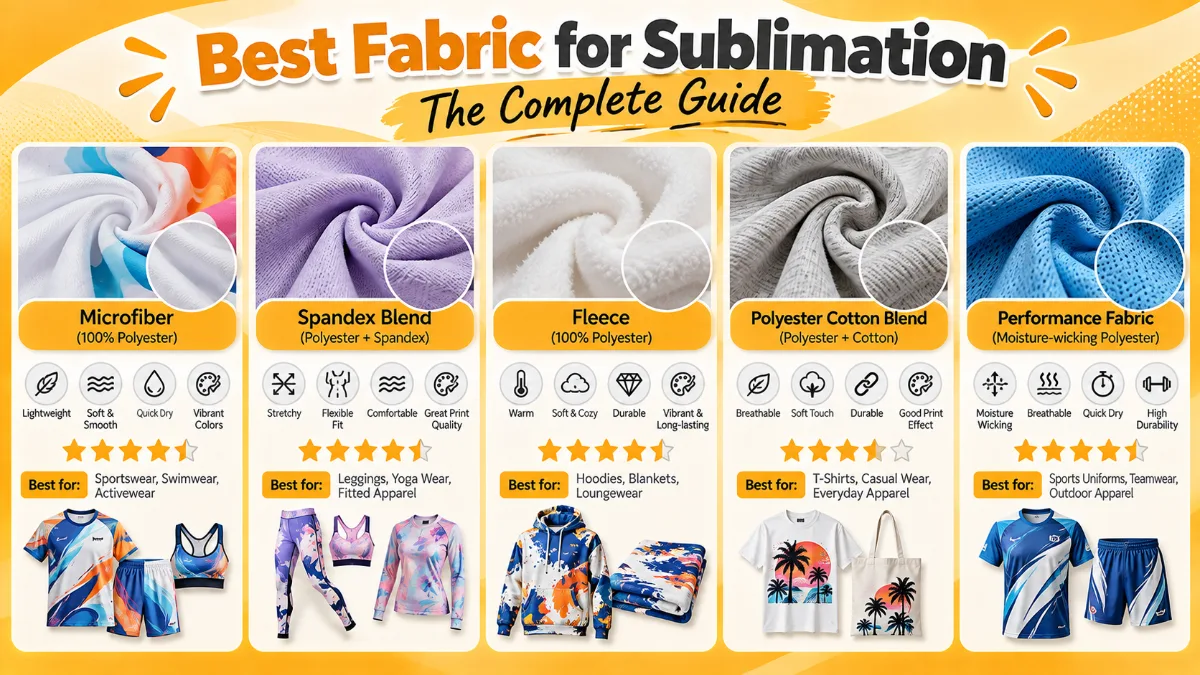
Here are the best fabrics for sublimation printing, ranked by performance, availability, and profit potential:
1. 100% Polyester Microfiber (Best Overall)
Performance: ★★★★★ Availability: High (most POD suppliers) Profit Margin: Excellent
Why it's the best:
- Maximum color vibrancy and sharpness
- Excellent durability (prints last 100+ washes)
- Smooth, consistent surface for even ink distribution
- Wide availability through POD suppliers like Yoycol and Printify
Best for:
- All-over-print apparel (hoodies, leggings, t-shirts)
- Performance wear (sportswear, activewear)
- Bold, colorful designs that need to pop
Common products:
- Polyester fleece blankets
- Performance t-shirts
- Athletic leggings
- Sports jerseys
Price range: $8-$15 base cost, $30-$50 retail
2. 95% Polyester / 5% Spandex Blend (Best for Apparel)
Performance: ★★★★☆ Availability: High Profit Margin: Very Good
Why it's great:
- Excellent print quality (nearly as vibrant as 100% polyester)
- Added stretch and comfort from spandex
- Soft hand feel that customers prefer
- Perfect for fitted garments
Best for:
- Leggings and yoga pants
- Fitted t-shirts and tank tops
- Athletic wear
- Any garment that needs stretch
Common products:
- All-over-print leggings
- Compression shirts
- Fitted dresses
- Swimwear
Price range: $8-$12 base cost, $35-$55 retail
3. Polyester Fleece (Best for Blankets & Hoodies)
Performance: ★★★★☆ Availability: Very High Profit Margin: Excellent
Why it's great:
- Soft, cozy texture customers love
- Excellent print quality on smooth side
- Thick material that feels premium
- Perfect for fall/winter products
Best for:
- Blankets (the #1 sublimation product)
- Hoodies and sweatshirts
- Robes and loungewear
- Winter accessories
Common products:
- Sherpa-lined blankets
- Fleece hoodies
- Bathrobes
- Throw blankets
Price range: $10-$18 base cost, $40-$65 retail
4. Polyester Cotton Blend (65/35 or 50/50)
Performance: ★★★☆☆ Availability: Very High Profit Margin: Good
Why it works:
- Softer, more natural hand feel than 100% polyester
- Vintage, muted look that's trendy
- Breathable and comfortable
- Lower cost than pure polyester
The trade-off:
- Colors are less vibrant (10-20% muted)
- Prints may fade faster over time
- Not ideal for bold, colorful designs
Best for:
- Vintage-style designs
- Muted, earth-tone color palettes
- Customers who prefer cotton feel
- Fashion apparel with subtle prints
Common products:
- Vintage-style t-shirts
- Fashion leggings
- Casual apparel
- Home decor items
Price range: $6-$10 base cost, $25-$40 retail
5. Performance Polyester (Moisture-Wicking)
Performance: ★★★★☆ Availability: Medium Profit Margin: Very Good
Why it's great:
- Excellent for activewear and sports
- Moisture-wicking properties
- Quick-drying
- UV protection (some varieties)
Best for:
- Athletic wear
- Sports jerseys
- Running clothes
- Gym apparel
Common products:
- Performance t-shirts
- Sports jerseys
- Running shorts
- Workout leggings
Price range: $10-$15 base cost, $35-$55 retail
Fabric Weight & Thickness: What Matters
Beyond fiber content, fabric weight affects your sublimation results:
Lightweight Fabrics (100-150 GSM)
Characteristics:
- Thin, breathable
- Drapes well
- Less durable
Best for:
- Summer apparel
- Layering pieces
- Lightweight leggings
Sublimation considerations:
- Ink may bleed through to the other side
- Use protective paper during heat pressing
- Not ideal for heavy, detailed designs
Medium Weight Fabrics (150-250 GSM)
Characteristics:
- Balanced weight and durability
- Good drape
- Versatile
Best for:
- T-shirts
- Dresses
- Standard leggings
- Most apparel
Sublimation considerations:
- Ideal weight for most sublimation projects
- Good ink absorption
- Minimal bleed-through
Heavyweight Fabrics (250-400 GSM)
Characteristics:
- Thick, substantial feel
- Very durable
- Warm
Best for:
- Hoodies
- Blankets
- Winter apparel
- Bags and accessories
Sublimation considerations:
- Requires longer press time (ensure full ink transfer)
- Excellent for bold, detailed designs
- Premium feel justifies higher pricing
Common Fabric Mistakes That Kill Your Prints
Avoid these costly mistakes:
Mistake #1: Using Low Polyester Content (<50%)
The problem: Ink won't bond properly, colors appear faded, prints wash out quickly.
The fix: Always check fabric composition before ordering. Stick to 65%+ polyester for acceptable results, 90%+ for best results.
Mistake #2: Ignoring Fabric Color
The problem: Sublimation works best on white or light-colored fabrics. Dark fabrics mute the colors dramatically.
The fix: Use white or pastel fabrics for vibrant results. If you must use dark fabrics, adjust your design (use lighter colors, increase contrast).
Mistake #3: Not Pre-Washing Fabric
The problem: Fabric finishes (sizing, softeners) can interfere with ink bonding, causing poor adhesion and fading.
The fix: Pre-wash fabric before sublimation (unless your POD supplier already does this). This removes finishes and ensures better ink absorption.
Mistake #4: Using the Wrong Heat Press Settings
The problem: Different fabrics require different temperature, time, and pressure settings. Using the wrong settings causes poor ink transfer or fabric damage.
The fix: Follow fabric-specific guidelines:
- 100% polyester: 400°F for 45-60 seconds
- Polyester blends: 380°F for 50-65 seconds
- Heavyweight fabrics: Add 10-15 seconds to press time
Mistake #5: Not Testing Fabric First
The problem: Ordering bulk fabric without testing leads to disappointing results and wasted money.
The fix: Always order a sample and test sublimation before committing to large orders. Check color vibrancy, durability (wash test), and hand feel.
How to Choose the Right Fabric for Your Products
Use this decision framework:
Step 1: What's Your Product?
| Product Type | Recommended Fabric | Why |
|---|---|---|
| Blankets | Polyester fleece (250-350 GSM) | Cozy, warm, excellent print quality |
| Leggings | 95% poly / 5% spandex (200-250 GSM) | Stretch, comfort, vibrant prints |
| T-shirts | 100% polyester microfiber (150-180 GSM) | Lightweight, breathable, sharp prints |
| Hoodies | Polyester fleece (300-400 GSM) | Warm, substantial feel, premium |
| Sportswear | Performance polyester (150-200 GSM) | Moisture-wicking, quick-dry |
| Dresses | 90-95% polyester (150-200 GSM) | Drape, comfort, good print quality |
Step 2: What's Your Design Style?
| Design Style | Recommended Fabric | Why |
|---|---|---|
| Bold, colorful | 100% polyester | Maximum vibrancy and sharpness |
| Vintage, muted | 65/35 poly-cotton blend | Soft, faded look that's trendy |
| Detailed, intricate | 100% polyester microfiber | Sharp detail reproduction |
| Minimalist, simple | Any polyester fabric | Works well on all types |
Step 3: What's Your Price Point?
| Price Point | Recommended Fabric | Why |
|---|---|---|
| Premium ($50+) | 100% polyester, heavyweight | Justifies premium pricing |
| Mid-range ($30-$50) | 90-95% polyester blend | Best balance of quality and cost |
| Budget ($20-$30) | 65/35 poly-cotton blend | Lower cost, acceptable quality |
Where to Source Sublimation Fabric for POD
You don't need to source fabric yourself — POD suppliers handle it. Here are the best options:
Print-on-Demand Suppliers
| Supplier | Fabric Options | Best For | Starting Price |
|---|---|---|---|
| Yoycol | 900+ AOP products, polyester-focused | All-over-print apparel, blankets | $6-$15 |
| Printify | Wide range, multiple suppliers | Variety of products, competitive pricing | $8-$20 |
| Printful | Premium fabrics, branded options | High-end apparel, quality focus | $12-$25 |
| JetPrint | Specialty products, shoes, accessories | Unique items, fast shipping | $10-$30 |
Fabric-Specific Recommendations
For blankets: Yoycol's polyester fleece blankets ($10-$15 base cost) are the best value.
For leggings: Printify's 95% poly / 5% spandex leggings ($8-$12 base cost) have excellent stretch and print quality.
For t-shirts: Yoycol's 100% polyester microfiber t-shirts ($6-$9 base cost) offer the best print vibrancy.
For hoodies: Printful's polyester fleece hoodies ($15-$20 base cost) are premium quality with excellent durability.
For a complete comparison of POD suppliers, our best AOP POD companies guide ranks every major platform.
Frequently Asked Questions
What's the best fabric for sublimation printing? 100% polyester microfiber is the best fabric for sublimation printing. It provides the brightest, most vibrant colors and excellent durability. For apparel that needs stretch, 95% polyester / 5% spandex is ideal. For blankets and hoodies, polyester fleece (250-400 GSM) works best.
Can I sublimate on cotton? No, sublimation ink doesn't bond to cotton fibers. You need at least 65% polyester content for acceptable results. On poly-cotton blends, the ink only bonds to the polyester portion, creating a muted, vintage look. For best results, use 90%+ polyester.
What polyester content do I need for sublimation?
- 100% polyester: Best results (vibrant, durable)
- 90-95% polyester: Excellent results (slightly softer feel)
- 65-80% polyester: Good results (vintage look)
- 50-65% polyester: Fair results (noticeably faded)
- Below 50%: Poor results (avoid)
Does fabric weight matter for sublimation? Yes. Lightweight fabrics (100-150 GSM) are breathable but may have ink bleed-through. Medium weight (150-250 GSM) is ideal for most apparel. Heavyweight fabrics (250-400 GSM) are best for blankets and hoodies, requiring longer press times.
What's the best fabric for sublimation blankets? Polyester fleece (250-350 GSM) is the best fabric for sublimation blankets. It's soft, warm, durable, and provides excellent print quality. Sherpa-lined fleece blankets are especially popular for their premium feel.
Can I use dark-colored fabric for sublimation? You can, but colors will be muted. Sublimation works best on white or light-colored fabrics. If you must use dark fabrics, adjust your design (use lighter colors, increase contrast) and expect 20-30% color reduction.
How do I prevent sublimation ink from bleeding through fabric? Use protective paper during heat pressing, choose medium-to-heavyweight fabrics (150+ GSM), and avoid excessive pressure. Lightweight fabrics are more prone to bleed-through.
What's the most durable fabric for sublimation? 100% polyester microfiber is the most durable fabric for sublimation. Prints last 100+ washes without significant fading. Polyester fleece is also very durable, especially for blankets and hoodies.
Choosing the right fabric for sublimation isn't complicated — just remember the #1 rule: polyester content is everything.
Stick to 90%+ polyester for best results, choose the right fabric weight for your product, and avoid common mistakes like using dark fabrics or skipping the pre-wash.
The fabrics we recommend (100% polyester microfiber, 95/5 poly-spandex blend, polyester fleece) are widely available through POD suppliers, have excellent print quality, and deliver the profit margins you need to build a successful POD business.
Ready to start selling sublimation products? Browse Yoycol's polyester fabric collection →
This guide is part of our sublimation printing series. Learn about sublimation on polyester, sublimation vs screen printing, or discover the best fabric for all-over-print