If you've ever examined a premium t-shirt and noticed the hem looks impossibly clean — no visible stitching, no rough edges, just a smooth, flat finish — you've seen heat-bonded technology in action.
In the custom apparel world, where print quality gets most of the attention, garment construction is the hidden differentiator that separates a "feels cheap" product from one customers reorder three times. Heat-bonded finishing is quietly becoming that edge for print-on-demand sellers who want to stand out.
This guide breaks down exactly what heat-bonded technology is, how it works, why it matters for your POD store, and how to market it to customers who care about quality.
What Is Heat-Bonded Technology?
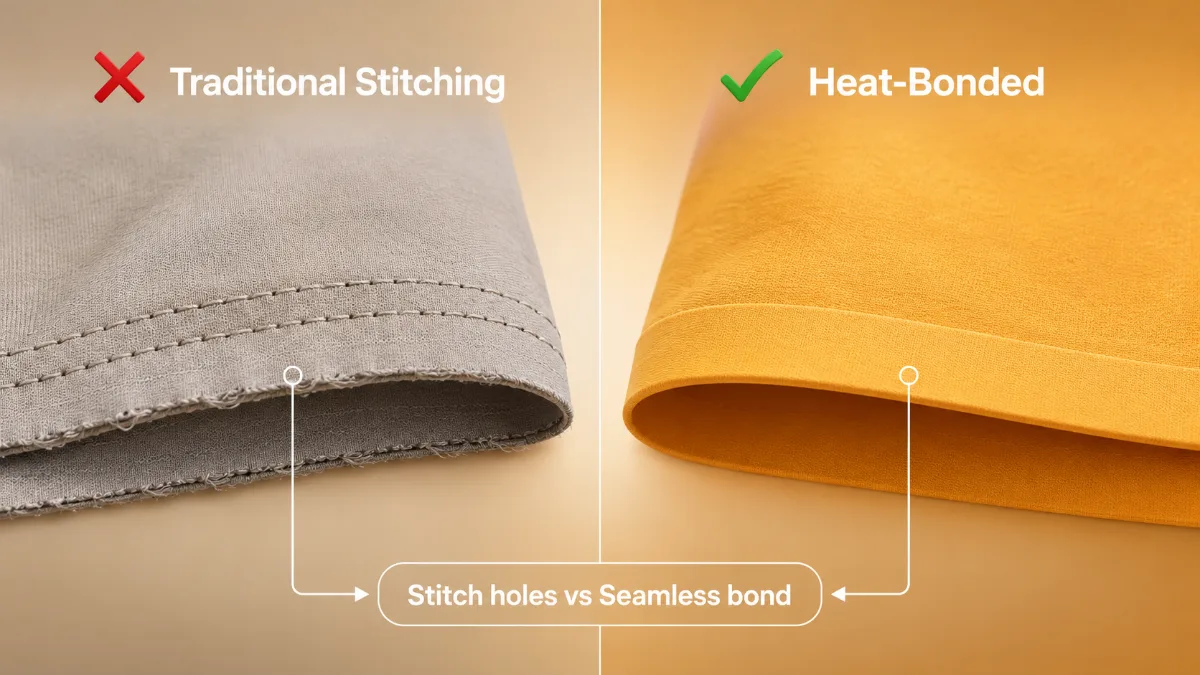
Heat-bonded technology (also called thermal bonding or heat-sealed construction) is a garment finishing method that replaces traditional needle-and-thread stitching at key structural points — typically the hem, sleeve cuffs, and collar edges.
Instead of sewing fabric layers together, a specialized thermoplastic adhesive tape is applied between the layers and activated by precisely controlled heat and pressure. The result is a flat, seamless bond that holds the fabric together without a single stitch.
How It Works — Step by Step
- Fabric cutting — Garment panels are precision-cut, usually from polyester or poly-blend fabrics.
- Tape placement — A thin strip of heat-activated adhesive tape is positioned between the fabric layers at the hem or cuff.
- Heat pressing — A calibrated heat press applies specific temperature, pressure, and time to activate the adhesive.
- Bonding — The adhesive melts into the fabric fibers, creating a strong, flat bond as it cools.
- Bartack reinforcement — Critical stress points (like where side seams meet the hem) receive bartack stitching — a dense, short stitch pattern — for extra durability.
The entire process requires precise temperature control (typically 130–160 °C depending on fabric and tape type), consistent pressure, and calibrated timing. Too hot and the adhesive bleeds through; too cool and the bond fails.
Heat-Bonded vs Traditional Stitching: A Side-by-Side Comparison
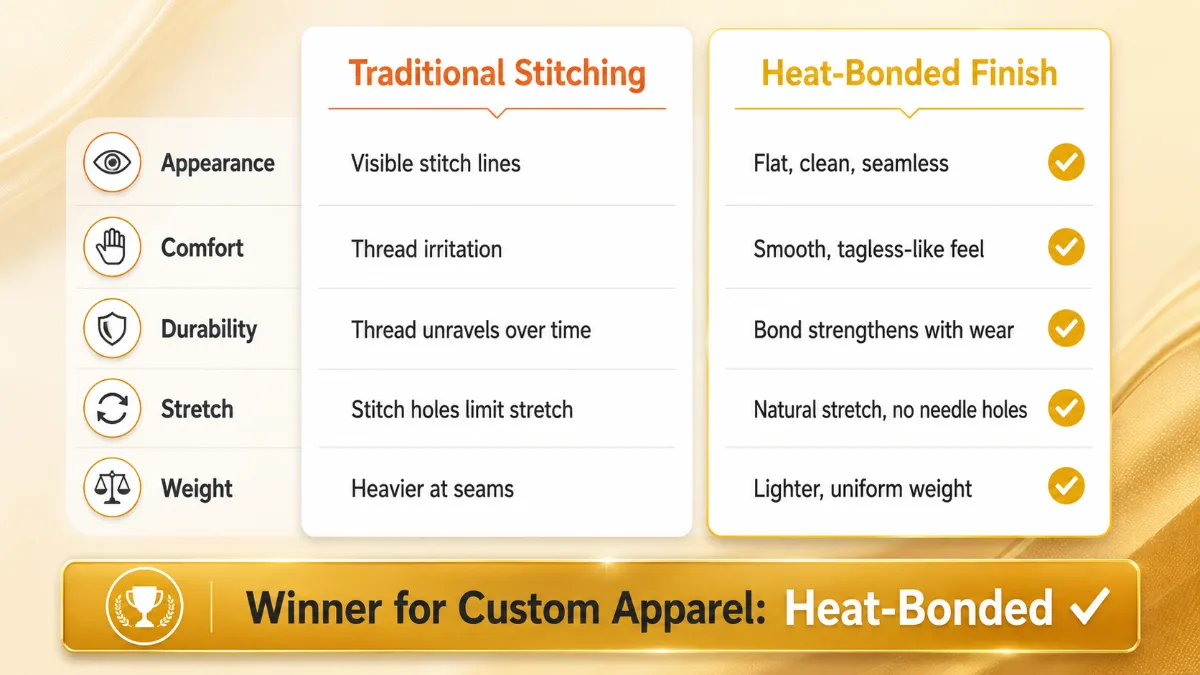
| Feature | Traditional Stitching | Heat-Bonded Finish |
|---|---|---|
| Edge appearance | Visible stitch lines, slight puckering | Flat, clean, seamless |
| Comfort | Thread can irritate sensitive skin | Smooth, tagless-like feel |
| Durability | Thread can unravel over time | No loose threads; bond strengthens with wear |
| Stretch recovery | Stitch holes limit stretch | Fabric stretches naturally, no needle holes |
| Weight | Slightly heavier at seams | Lighter, more uniform weight |
| Production complexity | Standard, widely available | Requires specialized equipment and calibration |
| Cost | Lower per unit | Slightly higher, justified by perceived quality |
Neither method is universally "better." Traditional stitching works well for structured garments like denim or heavy canvas. But for performance-oriented and comfort-focused apparel — the kind POD customers actually reorder — heat-bonded finishing offers clear advantages.
5 Reasons Heat-Bonded Construction Matters for Custom Apparel
1. Premium Perceived Value
Customers form an opinion about your brand within seconds of touching the product. A clean, stitch-free hem signals intentional design, not mass-market corners-cut. This is the difference between a $25 tee and a $40 tee — even when the base cost gap is under $2.
2. Better Canvas for All-Over Print
All-over-print products rely on edge-to-edge design coverage. Traditional stitching creates ridges and puckering that interrupt the print surface. Heat-bonded edges stay flat, so your designs look continuous and professional from shoulder to hem.
3. Enhanced Comfort
No thread bumps against the skin. No scratchy overlock stitches at the wrist. For athleisure, fitness wear, and everyday basics, this is a tangible comfort upgrade your customers will notice — and mention in reviews.
4. Durability Without Bulk
Bonded edges resist fraying and unraveling, the two most common reasons customers retire a garment. Combined with bartack reinforcement at stress points, heat-bonded apparel maintains its structure through repeated wash cycles without adding weight or stiffness.
5. Stronger Product Photos and Mockups
Flat, clean edges photograph better. When you create product mockups that sell, heat-bonded garments present a more polished look in listing images — the kind of detail that lifts click-through rates on Etsy and Shopify.
Which Products Benefit Most from Heat-Bonded Finishing?
Not every garment needs heat bonding. Here's where it delivers the biggest impact for POD sellers:
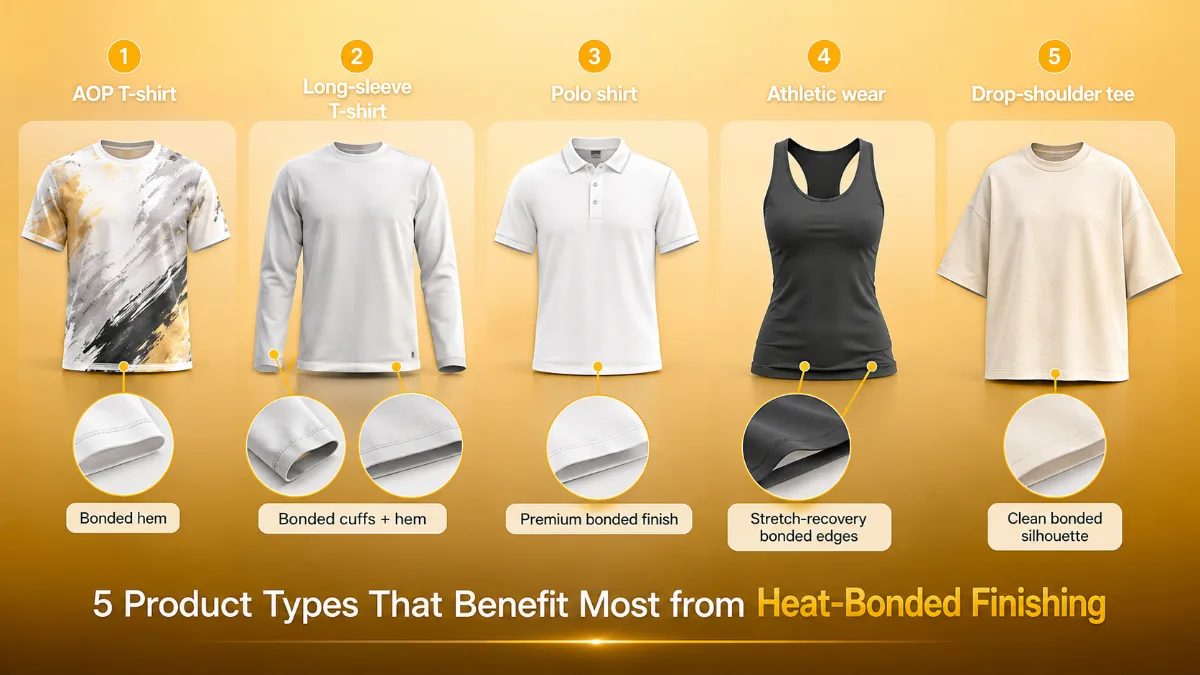
| Product Type | Why Heat-Bonded Works |
|---|---|
| T-shirts (AOP) | Clean hem showcases full-coverage prints; comfort upgrade over basic tees |
| Long-sleeve tees | Bonded cuffs prevent stretching and fraying at the wrist — a high-wear zone |
| Polo shirts | Premium finish justifies higher price points; ideal for corporate/team branding |
| Athletic wear | Stretch recovery + no irritation = performance-ready construction |
| Drop-shoulder / streetwear | Relaxed silhouettes look elevated with clean bonded edges |
Pro tip: When choosing which POD products to sell, heat-bonded options let you position your store in the "premium custom" tier rather than competing on price alone with generic print-on-demand sellers.
How to Market Heat-Bonded Products to Your Customers
Most end consumers don't know the term "heat-bonded." That's actually your advantage — you get to educate and differentiate at the same time.
Listing Copy Tips
- Lead with the benefit, not the term: "Ultra-clean, stitch-free hem for a premium feel" outperforms "heat-bonded technology" in product descriptions.
- Use it in your "Why Buy From Us" section: Explain that your garments use bonded construction — a detail most fast-fashion brands skip.
- Comparison framing: "Unlike standard tees with visible stitching, our shirts feature seamless bonded edges for a smoother fit and longer-lasting shape."
Photography Tips
- Shoot close-up detail shots of the bonded hem and cuffs — this is where the quality difference is most visible.
- Include a side-by-side with a standard stitched garment if possible.
- Flat-lay photos on a clean background highlight the smooth edge profile best.
Pricing Strategy
Heat-bonded garments carry a slightly higher base cost, but the perceived quality upgrade supports premium pricing. A heat-bonded AOP tee can comfortably command $5–$10 more than a standard equivalent. Check our guide on how to price print-on-demand products for profit for detailed margin strategies.
Heat-Bonded + All-Over-Print: A Natural Fit
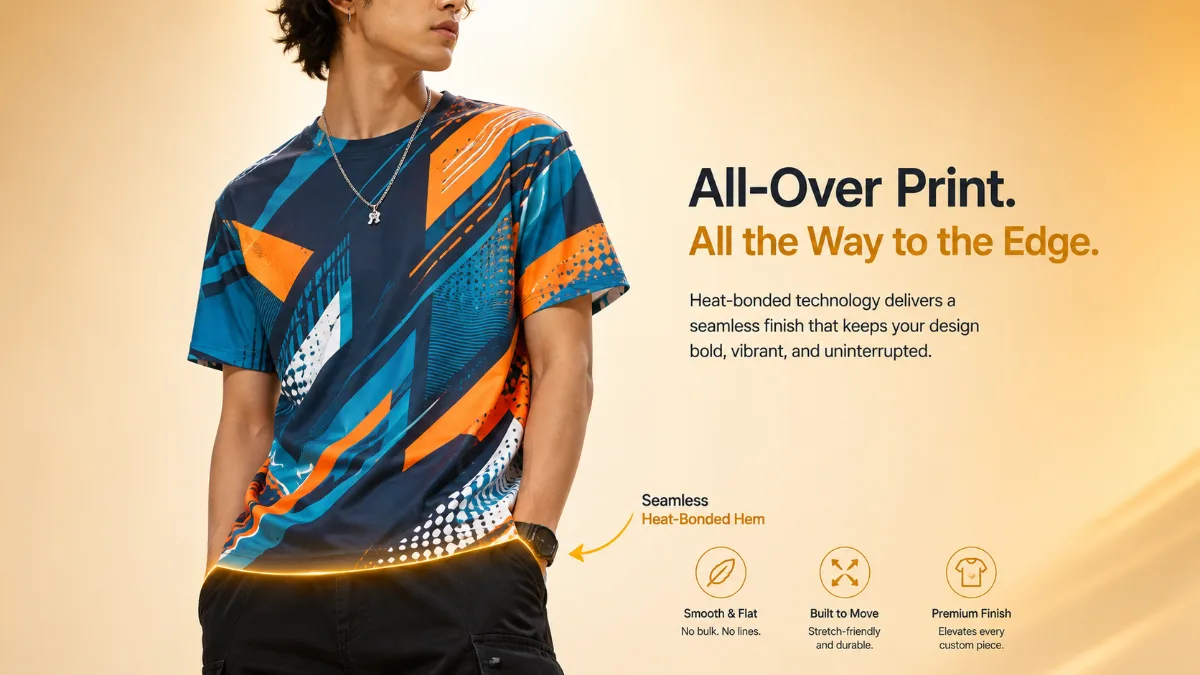
Heat-bonded construction and all-over-print (AOP) are a natural pairing. Here's why:
- AOP covers the entire garment — every inch of fabric is printed. The cleaner the garment construction, the better the print presentation.
- Polyester-based fabrics work best for both sublimation printing (which AOP relies on) and thermal bonding, so the material compatibility is built in.
- Premium positioning — AOP products already command higher prices than standard DTG prints. Adding heat-bonded construction reinforces the quality story.
Platforms like Yoycol now offer a growing range of heat-bonded AOP products — from basic tees to polo shirts and drop-shoulder styles — all available with no minimum order and integrated directly with your or Etsy store.
Frequently Asked Questions
Is heat-bonded clothing durable? Yes. Heat-bonded edges resist fraying and thread unraveling — two of the most common failure points in traditional garments. With proper care (machine wash cold, hang dry), heat-bonded apparel maintains its shape and finish through hundreds of wash cycles.
Does heat bonding work on all fabrics? Heat bonding works best on polyester and polyester-blend fabrics, which is why it pairs perfectly with sublimation-printed all-over apparel. Natural fibers like 100% cotton are more challenging to bond due to their lower heat tolerance.
Is heat-bonded the same as seam-sealed or waterproof taping? No. Seam sealing (or tape sealing) is a waterproofing technique used in outdoor jackets and rainwear, where adhesive tape covers stitched seams to block water penetration. Heat-bonded construction is a finishing technique that replaces stitching at hems and cuffs for a cleaner look and feel. Both use heat-activated adhesives, but they serve different purposes.
Can I customize heat-bonded garments with my own designs? Absolutely. Heat-bonded garments are fully compatible with all-over sublimation printing. You can apply edge-to-edge custom designs just like any other AOP product — the bonded edges don't interfere with the printing process.
How much more expensive are heat-bonded products? Base costs are typically $1–$3 higher than equivalent stitched garments. However, the quality upgrade supports premium retail pricing, often resulting in equal or better profit margins than standard products.
Heat-bonded technology is one of those details that customers feel before they can name it. The smooth hem, the absence of thread irritation, the way the garment holds its shape — it all adds up to a product people want to buy again.
For POD sellers, it's a low-effort, high-impact upgrade: the manufacturing complexity is handled by your supplier, while you reap the benefits in reviews, repeat purchases, and premium positioning.
Ready to add heat-bonded products to your store? Browse the full heat-bonded collection on Yoycol — no minimum order, print-on-demand ready →
This guide is part of our series on all-over-print technology. Try the free 3D mockup tool to preview your designs on heat-bonded garments before you list them.