Print on demand has come a long way from being simply a low-inventory selling model. Today, it is becoming one of the most practical ways for brands, creators, and online sellers to respond quickly to what people are already paying attention to.
That is what makes the current moment especially interesting. People are finding products in more places than before. They might come across a design in a short video, notice a themed item during a major event, or discover a product while browsing online for gift ideas, seasonal products, or something tied to a specific community or interest. For POD sellers, that change creates real opportunity.
Shopping habits are changing, and that matters for POD
Online shopping is still growing, but the bigger shift is in how people decide what to buy.
The path is no longer simple. A customer might first see a product on social media, search for similar styles later, compare a few options, and then place the order on a marketplace or brand site. That means products need to do more than just exist in a store. They need to catch attention quickly, feel relevant to the moment, and be presented clearly enough to help someone make a decision.
This is where POD has a real advantage. It gives sellers the flexibility to move quickly, test ideas without heavy inventory pressure, and turn a design concept into a full collection without waiting on large production runs.
Big moments are creating stronger product demand
One of the clearest opportunities right now is event-led merchandise.
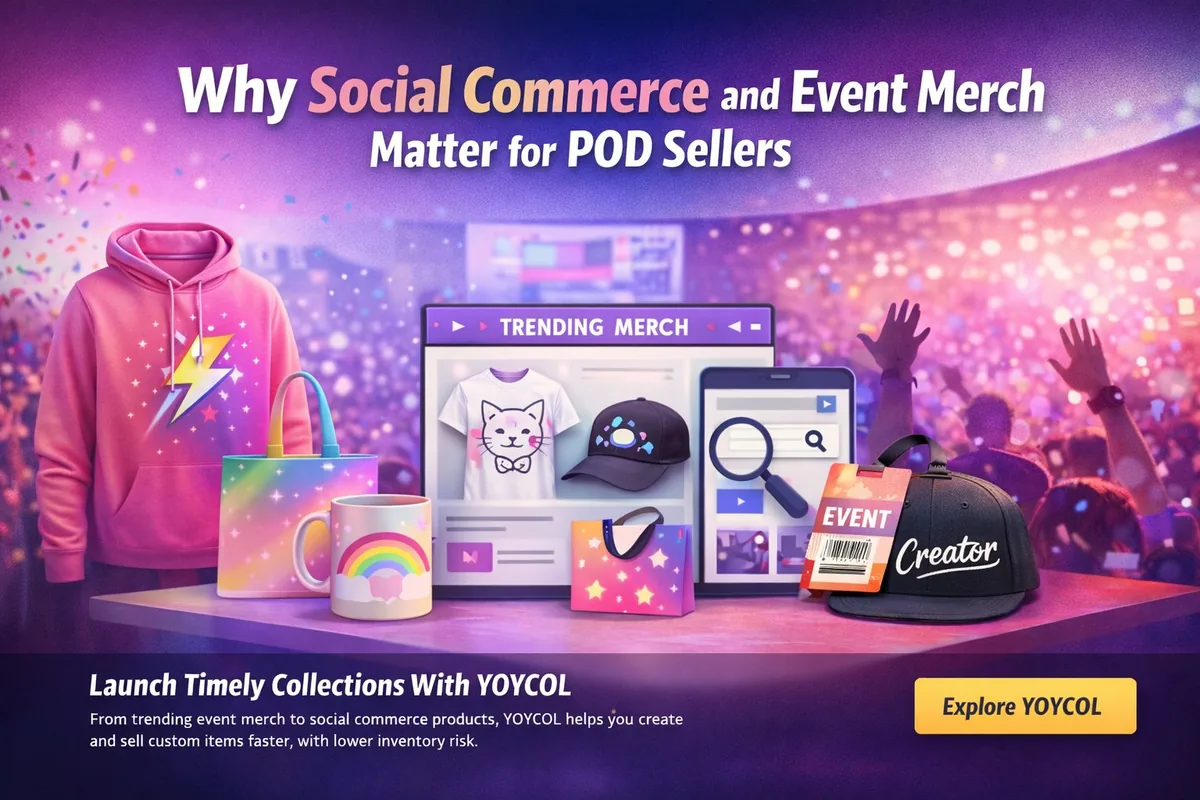
Large public events, national celebrations, and sports moments naturally create demand for themed products. People want items they can wear, share, gift, or use as part of the experience. That could mean apparel, hats, drinkware, bags, small accessories, or products tied to gatherings, community events, and seasonal campaigns.
The value here is not just in chasing a trend for a few days. It is in recognizing when a larger moment creates demand that can extend across multiple product categories.
For example, patriotic and commemorative themes can work across T-shirts, caps, mugs, and tote bags. Sports-inspired themes can expand into fan apparel, watch-party accessories, and city-inspired products. In both cases, sellers have room to create original collections that feel timely and relevant without relying on the same one-size-fits-all approach.
POD works especially well for themed collections
A big reason POD fits this kind of demand so well is because it makes it easier to build around a theme instead of a single item.
One design idea does not have to stop at one product. It can become a small collection with multiple entry points for different buyers. Some customers may want a T-shirt. Others may prefer a hat, a mug, or a giftable item. A broader collection also helps a store feel more intentional and easier to shop.
This approach works well for:
patriotic collections
sports-inspired products
creator merch
event giveaways
gift-focused seasonal items
niche community themes
Instead of asking, “What product should we upload next?” the better question is often, “What kind of collection makes sense for this moment?”
Social commerce is making product timing more important
Social platforms are also changing the way products gain traction.
A product can now get attention because it fits a conversation, a visual trend, or a specific audience mood. That makes timing more important than ever. Sellers who can respond quickly to what people are already engaging with have a better chance of turning interest into sales.
For POD businesses, this does not mean rushing everything. It means building a smoother process for moving from idea to finished product page. The faster a seller can create the design, prepare the visuals, write the listing, and publish the collection, the easier it becomes to make the most of a trend while it still feels fresh.
Product pages need to do more work
Strong product pages matter more in this environment.
When customers discover a product through content or search, they usually decide very quickly whether it feels worth buying. If the listing is vague, the visuals feel generic, or the details are unclear, the product loses momentum.
A better product page should help answer simple questions right away:
What does the product actually look like?
What kind of material or finish does it have?
How will the design appear on the final product?
Who is it for?
Is it better for everyday wear, gifting, events, or promotions?
How quickly can it be produced and shipped?
The easier it is to understand a product, the easier it is to sell it.
Sellers should think beyond individual SKUs
Many stores still build their catalogs one product at a time. That works, but it often misses the bigger opportunity.
The stores that stand out usually make their product selection feel connected. Their items fit together visually, seasonally, or thematically. That helps customers shop with more confidence and gives the brand a stronger point of view.
For POD sellers, this means thinking less about isolated listings and more about category planning. A good product is useful. A well-built collection is easier to market, easier to explain, and often easier to scale.
What this means for YOYCOL
For a POD platform, the value is not only in offering customizable products. It is in helping sellers respond faster and build stronger collections with less risk.
That means supporting sellers with products that fit real market demand, helping them create better product presentations, and making it easier to launch collections around seasons, communities, and public moments.
The sellers who perform well are not always the ones with the biggest catalogs. Often, they are the ones with better timing, clearer product positioning, and a stronger understanding of what their audience wants right now.
Final thoughts
POD is in a strong position because the market increasingly rewards flexibility.
People are shopping through content, reacting to public moments more quickly, and looking for products that feel timely, personal, and easy to buy. That creates a good environment for POD sellers, creators, and brands that know how to turn ideas into products without overcomplicating the process.
The opportunity is not just to sell custom products. It is to build products around moments people already care about, and to do it in a way that feels relevant, clear, and easy to shop.
That is where POD becomes more than a production model. It becomes a practical way to bring new ideas to market faster.
Ready to turn ideas into sellable products?
From apparel and accessories to themed collections and creator merch, YOYCOL helps you launch custom products with more flexibility and lower inventory risk. Explore more print-on-demand solutions here: https://www.yoycol.com/