If you’ve been in print-on-demand for a while, you’ve probably heard it before:
“POD is dead.”
But that’s not really true.
What’s actually happening is simpler — the rules have changed.
In 2026, print-on-demand is no longer a shortcut business. It’s becoming a real system-driven model, where branding, speed, and workflow matter more than just uploading designs.
The Market Is Growing — But It’s Getting Harder
Let’s start with reality.
The global print-on-demand market is growing fast, with a projected 26% CAGR, and expected to reach over $100 billion by 2034.
At the same time, the US market is seeing strong demand for personalized products, especially in apparel, gifts, and lifestyle items.
So no — demand isn’t going away.
But competition is higher than ever.
Ad costs are rising
Marketplaces are saturated
Customers expect faster delivery
Margins are tighter
As one seller put it on Reddit:
“It’s tighter now… personalization is doing heavy lifting.”
That’s the key shift.
What Doesn’t Work Anymore
If you’re still doing this, you’re probably struggling:
Uploading generic designs
Selling basic T-shirts with no niche
Relying only on marketplaces like Etsy or Redbubble
Running ads without a clear brand
The “upload and pray” model is gone.
Even experienced sellers now agree:
“Unless you have unique designs… it’s not worth it.”
What Actually Works in 2026
1. Niche First, Not Product First
The biggest mistake is trying to sell to everyone.
Winning sellers are going deeper, not broader.
Instead of:
“Dog lover shirt”
They go:
“Bernese mountain dog hiking dad”
Because:
“The sellers who make money almost always got the niche right.”
2. Personalization Is No Longer Optional
Customers don’t want generic products anymore.
They want:
Names
Dates
Inside jokes
Identity-based designs
This is one of the biggest drivers behind POD growth in 2026.
Products tied to emotion and identity convert significantly better.
3. Speed = Conversion
This is one of the most underrated factors.
Customers expect:
Fast production
Fast shipping
Real-time tracking
If your supplier is slow, your conversion drops — simple as that.
This is why localized production (like US-based printing) is becoming more important than ever.
4. Content Is the New Traffic Engine
Ads are no longer enough.
Many POD sellers are shifting toward:
TikTok content
Instagram Reels
UGC-style videos
“behind-the-scenes” production clips
As one Reddit user explained:
“Focus on Reels… show design process, mockups, packaging.”
In other words:
👉 Content is your storefront now
5. Systems Beat Hustle
In the past, people tried to scale by uploading more designs.
It’s about:
automation
repeatable workflows
content-driven traffic
The sellers scaling today are building systems, not side hustles.
Because:
Modern POD is about systems, not just products.
The Real Opportunity Right Now
Here’s what most people are missing:
Print-on-demand is no longer about selling products.
It’s about:
👉 Turning ideas into scalable systems
The biggest opportunities in 2026 are:
Creator brands
Micro-niche communities
Event-based products
B2B customization (teams, schools, companies)
Not random designs.
Where Yoycol Fits In
Instead of focusing only on production speed, what really matters today is stability and flexibility across the entire supply chain.
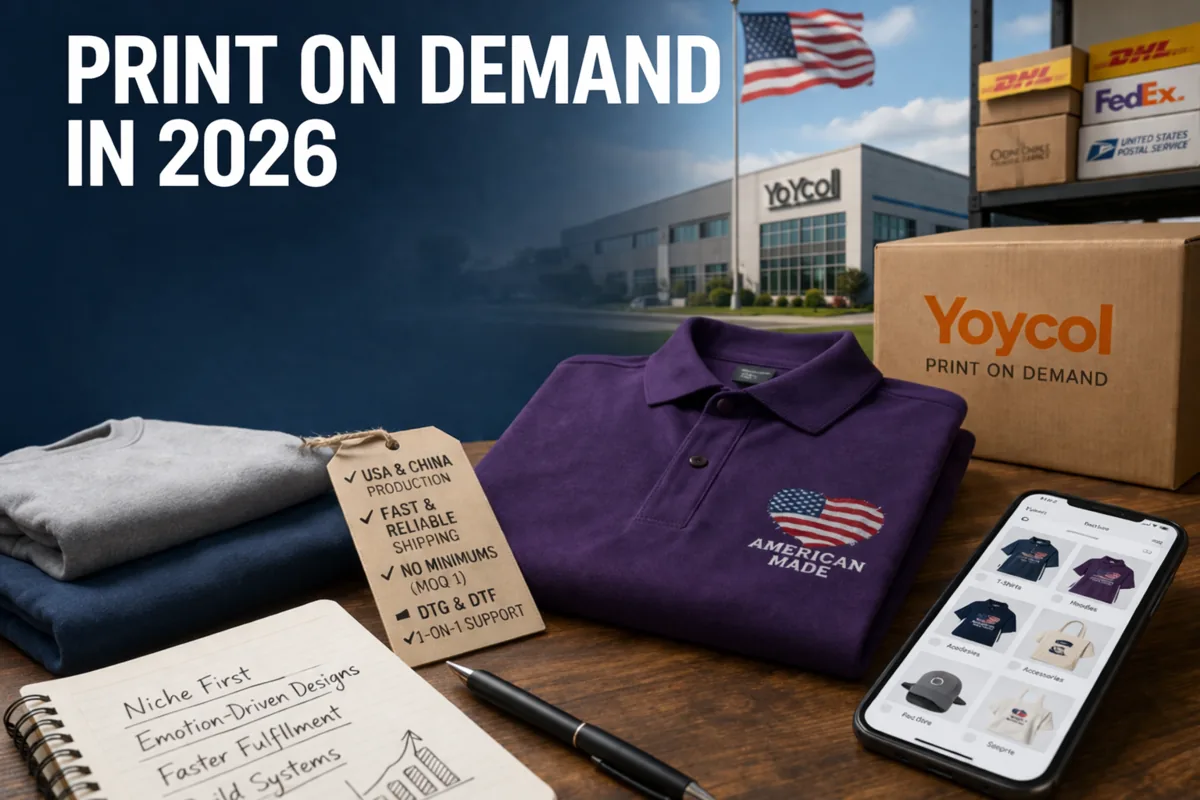
Yoycol operates its own factories and warehouses in both the United States and China, and has built long-term partnerships with reliable carriers such as DHL, FedEx, and USPS. This allows sellers on platforms like Shopify, Etsy, eBay, and Shopee to access more stable and trackable shipping solutions.
Depending on where your store is based, Yoycol can also provide estimated shipping times and cost references, helping you plan your pricing and margins more effectively.
Beyond production, Yoycol also shares practical insights from experienced Etsy and eBay sellers — including tips on product photography and listing optimization, which can be especially valuable for new stores trying to improve conversions.
Their product catalog is also broad enough to support expansion, covering categories like T-shirts, hoodies, and accessories, making it easier to test and scale different product lines.
Most importantly, Yoycol understands the needs of small brands and new sellers. With a minimum order quantity as low as one piece, you can test ideas without taking on inventory risk. They also provide dedicated one-on-one support, helping you solve technical or operational issues as you grow.
Final Thoughts
Print-on-demand is not dead.
But the easy version of it is.
If you’re entering POD in 2026, here’s what matters most:
Pick a niche (don’t go broad)
Focus on emotional designs
Build content, not just listings
Work with fast, reliable suppliers
Think in systems, not one-off sales
Because at the end of the day:
POD didn’t get harder
It just got smarter
One Simple Question
If you’re still relying on:
random designs + slow suppliers + no system
Then the question isn’t:
“Is POD dead?”
It’s:
👉 Are you running it the old way?
You can check out customizable apparel options here: https://www.yoycol.com/