Starting a print on demand business is one of the lowest-risk ways to launch an online store in 2026. You don't need inventory, a warehouse, or thousands of dollars in startup capital. You need a design, a product, a store, and a supplier — and you can have all four set up in a single afternoon.
But "easy to start" doesn't mean "easy to succeed." The sellers who actually make money with POD aren't just uploading random designs and waiting for orders to roll in. They follow a clear process: pick the right niche, choose the right products, set up the right store, and market to the right audience.
This guide walks you through every step — from idea to first sale — with practical examples and zero fluff. By the end, you'll know exactly how to launch your print on demand business.
For the bigger picture on how POD generates income, including realistic revenue expectations and advanced strategies, our complete guide to making money with print on demand covers the full landscape.
Step 1: Understand How Print on Demand Works
Before you build anything, make sure you understand the model.
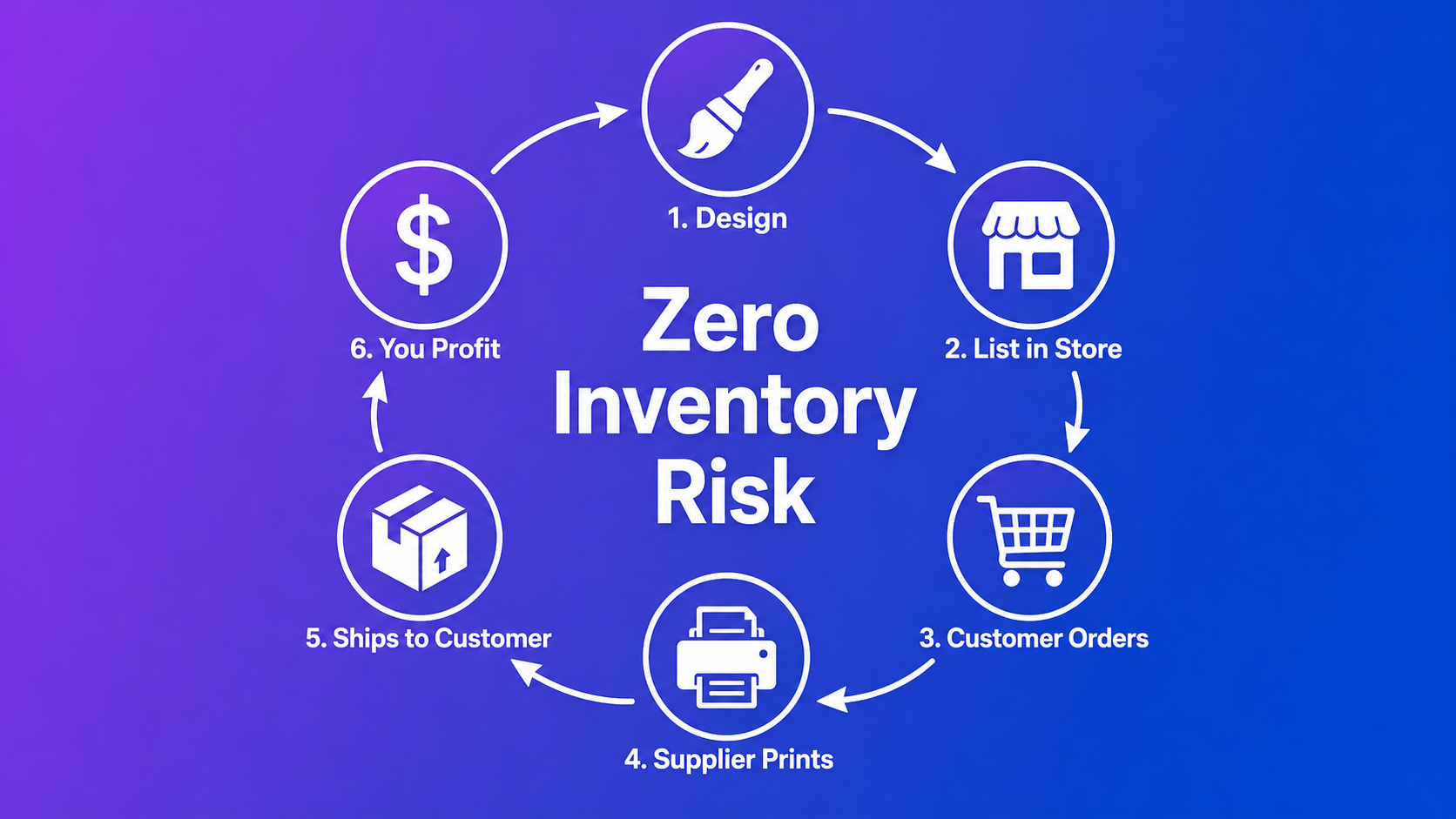
Print on demand is a fulfillment method where products are created only after a customer places an order. Here's the flow:
-
You design a product (T-shirt, hoodie, mug, etc.)
-
You list it in your online store at your chosen price
-
A customer buys it
-
The order is sent to your POD supplier
-
The supplier prints, packages, and ships it directly to the customer
-
You keep the difference between the retail price and the base cost
You never hold inventory. You never ship a package. Your role is design, marketing, and customer service. The supplier handles production and fulfillment.
Why this matters: Because you pay nothing until a sale is made, your financial risk is essentially zero. The worst outcome of a failed design is wasted time — not wasted money. That's what makes POD so attractive for first-time entrepreneurs.
Step 2: Choose Your Niche
This is the step most beginners rush through — and it's the step that determines whether your business succeeds or fails.
A niche is a specific audience with shared interests, identities, or needs. The more specific your niche, the easier it is to create products people actually want to buy.
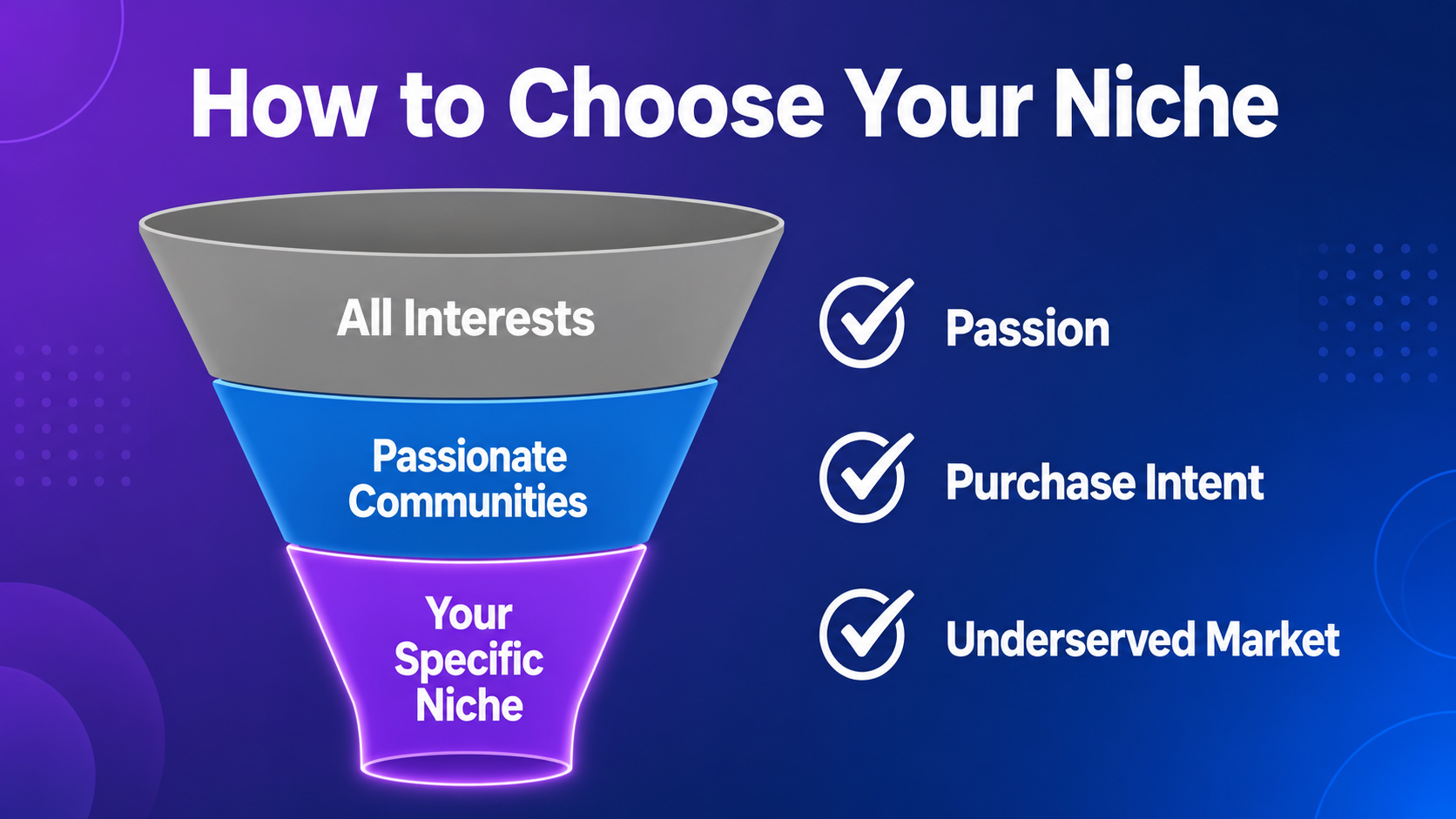
Bad vs. Good Niche Selection
|
Too Broad (Bad) |
Specific (Good) |
|---|---|
|
"Funny T-shirts" |
"Funny T-shirts for ER nurses" |
|
"Dog lovers" |
"French Bulldog owners" |
|
"Fitness" |
"Powerlifting women over 40" |
|
"Gaming" |
"Retro Nintendo nostalgia fans" |
|
"Travel" |
"National Parks passport stamp collectors" |
How to Find Your Niche
Ask yourself three questions:
-
What communities am I part of? (Professions, hobbies, fandoms, lifestyles)
-
What do those communities spend money on? (T-shirts, mugs, stickers, hoodies)
-
Is there a gap in what's available? (Search Etsy — if everything looks the same, find a more specific angle)
Validate Before You Commit
Before investing time in designs, do a quick validation:
-
Search Etsy for your niche keywords. Are there products selling? (Good.) Are there thousands of identical products? (Too competitive — narrow down.)
-
Check Reddit and Facebook Groups for your niche. Are people actively talking about and buying niche merchandise?
-
Look at Google Trends for your niche keywords. Is interest stable or growing? (Good.) Is it a dying trend? (Skip it.) For a more structured approach, use this guide to find trending print-on-demand niches using marketplace demand signals.
The ideal niche sits at the intersection of passion (people care deeply), purchase intent (people buy merch), and underserved market (not everyone is already selling to them).
Step 3: Choose What Products to Sell
Once you have your niche, choose the products that fit it.
Starter Products (Easy to Design, Broad Appeal)
-
T-shirts — the most popular POD product. Universal demand, easy to create, works with almost any niche.
-
Mugs — great for text-based designs, quotes, and profession-specific humor.
-
Stickers — low cost, high volume, perfect for niche communities.
-
Phone cases — popular accessory market, simple design requirements.
Premium Products (Higher Margins, More Design Effort)
-
Hoodies — higher base cost, but sell at $45–$65 with strong margins.
-
All-over-print products — designs that cover the entire garment (front, back, sleeves, hood). If you're unfamiliar with AOP, here's a quick introduction to all-over-print and why it's one of the highest-margin categories in POD.
-
Leggings and activewear — strong demand in fitness and lifestyle niches.
-
Canvas prints and posters — high perceived value, great for art-focused niches.
-
Blankets — excellent Q4 product with high margins and gift appeal.
How Many Products to Start With
Don't try to launch with 100 products. Start with 3–5 core products in your niche, get them right, then expand. For example:
-
A pet breed niche store might start with: T-shirt, mug, hoodie, and phone case — all featuring the same breed in different design styles.
-
A profession niche store might start with: funny quote T-shirt, motivational mug, and a pride-themed hoodie.
For a deeper look at which product categories have the highest demand and margins right now, our best-selling AOP products guide breaks down the top performers.
Step 4: Choose Your POD Supplier
Your supplier is the backbone of your business. Choose wrong, and you'll deal with quality issues, slow shipping, and unhappy customers.
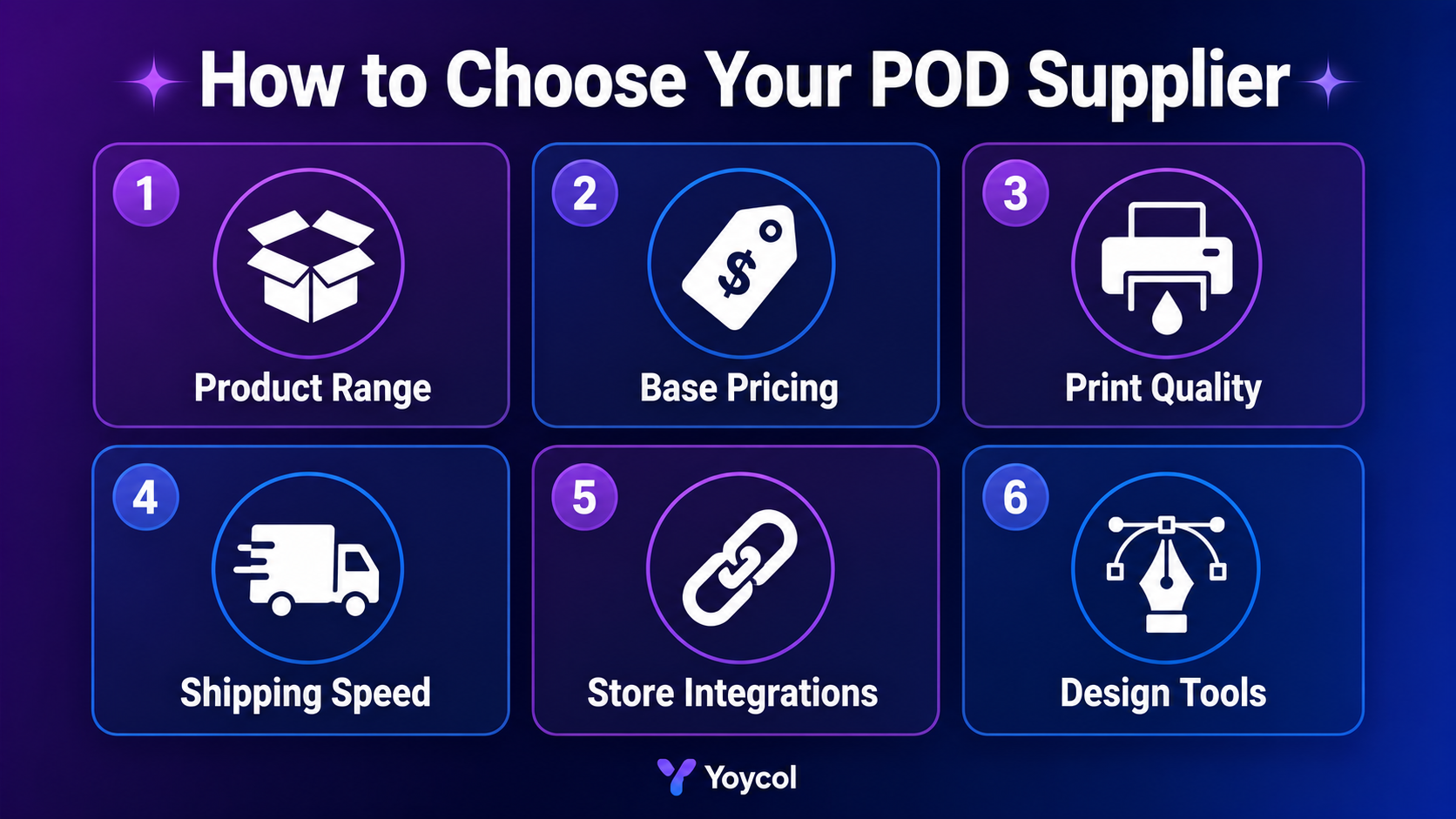
Here's what to evaluate:
|
Factor |
What to Look For |
Why It Matters |
|---|---|---|
|
Product range |
Wide selection in your niche categories |
Room to expand as you grow |
|
Base pricing |
Low enough for 40–60% margins |
Determines your profitability |
|
Print quality |
Vibrant, durable prints |
Fewer returns, better reviews |
|
Production time |
3–7 days |
Faster = happier customers |
|
Shipping options |
Global fulfillment |
Reach customers everywhere |
|
Store integrations |
Shopify, Etsy, WooCommerce |
Automated order processing |
|
Design tools |
Built-in mockup generators |
Saves time and money |
Always order samples before listing any product. Photos on the supplier's website don't always match the real thing. Hold the product in your hands, check the print quality, feel the fabric, and wash it once to see how it holds up.
Yoycol is a strong option for sellers who want a wide product range, competitive pricing, and specialized all-over-print capabilities. You can browse the full catalog of 1,600+ products →
Step 5: Set Up Your Online Store
You need a platform to sell on. Here are the three most popular options for POD beginners:
Etsy (Best for Beginners)
Why: Built-in marketplace with millions of active buyers already searching for products. No monthly fee (just $0.20 per listing + transaction fees). Perfect for testing your niche without upfront costs.
Best for: Sellers who want organic traffic without paid ads, and who are comfortable operating within Etsy's marketplace rules.
Setup time: 1–2 hours.
Shopify (Best for Brand Building)
Why: Full control over your store's design, branding, and customer experience. Connects directly to POD suppliers via apps. You own your customer data and email list.
Best for: Sellers building a standalone brand, or who plan to scale beyond a marketplace.
Cost: ~$39/month.
Setup time: 3–5 hours (including theme customization).
Amazon Merch on Demand (Best for Volume)
Why: The world's largest marketplace with unmatched traffic. Products appear in Amazon search results alongside millions of other items.
Best for: Sellers who can get approved (application required) and want access to Amazon's massive audience.
Limitation: Strict content policies, limited product selection, and intense competition.
Pro tip: Many successful POD sellers start on Etsy (for free traffic and validation), then expand to Shopify (for brand control) once they've found their winning niche. You don't have to pick just one — use multiple platforms as you grow.
Step 6: Create Your Designs
You don't need to be a graphic designer. Here are the most common approaches:
DIY Tools
-
Canva — Free drag-and-drop tool with templates. Perfect for text-based designs and simple graphics.
-
Photopea — Free browser-based Photoshop alternative. Handles PSD files and layers.
-
GIMP — Free open-source image editor for more complex designs.
AI-Powered Tools
-
Midjourney — Generate artwork from text prompts. Great for illustrations, patterns, and artistic designs.
-
DALL-E — OpenAI's image generator. Good for concept art and unique visuals.
-
PatternedAI — Generate seamless repeating patterns for all-over-print products.
Hire a Designer
-
Fiverr — Budget-friendly designers starting at $5–$50 per design.
-
Upwork — More experienced designers for custom, high-quality work.
-
99designs — Design contests where multiple designers submit concepts.
Design Essentials
Regardless of how you create your designs, follow these rules:
-
Use high resolution. 300 DPI minimum. Low-res designs look blurry on fabric.
-
Use transparent PNGs for T-shirts and hoodies (unless you're doing all-over-print, which uses full-coverage artwork).
-
Keep text large and readable. If someone can't read your text from 3 feet away, it's too small.
-
Test on a mockup. Preview your design on a realistic product image before listing. Yoycol's free 3D mockup generator lets you see exactly how your design looks on the actual product.
-
Study what sells. Search your niche on Etsy. Note the design styles, color palettes, and text treatments of the best-selling listings. Don't copy — but learn from what works.
Step 7: Price Your Products
Pricing is where most new sellers get it wrong. They either price too low (killing their margins) or too high (killing their conversions).
The formula:
Retail Price = Base Cost ÷ (1 − Target Margin)
Example: If your hoodie costs $22 to produce and you want a 50% margin:
$22 ÷ (1 − 0.50) = $44 retail price
Typical POD pricing in 2026:
|
Product |
Base Cost |
Recommended Retail |
Margin |
|---|---|---|---|
|
T-Shirt |
$8–$12 |
$22–$30 |
45–63% |
|
Hoodie |
$22–$28 |
$45–$60 |
45–57% |
|
Mug |
$6–$9 |
$14–$20 |
50–57% |
|
Phone Case |
$5–$8 |
$15–$22 |
55–67% |
|
AOP Leggings |
$15–$20 |
$35–$50 |
50–60% |
Pricing tips:
-
Check competitors. Search similar products on Etsy and note the price range. Price within that range — not below it.
-
Don't race to the bottom. Competing on price is a losing strategy. Compete on design quality and niche specificity instead.
-
Use psychological pricing. $29 outperforms $30. $49 outperforms $50. Prices ending in 5 or 9 consistently convert better.
-
Factor in platform fees. Etsy takes ~6.5% + payment processing. Make sure your margin accounts for this.
For a deep dive into POD pricing strategy — including how to test price points and when to use discounts — our complete POD pricing guide covers the full framework.
Step 8: List Your Products and Optimize for Search
Creating the product is half the battle. Getting it found is the other half.
Listing Optimization Checklist
Title:
-
Include your main keyword (e.g., "French Bulldog Mom T-Shirt")
-
Add secondary descriptors (e.g., "Funny Dog Lover Gift, Frenchie Mom Tee")
-
Front-load the most important words
Description:
-
First 160 characters = your meta description (shows in search results)
-
Describe the design, who it's for, and when to buy it (gift, birthday, holiday)
-
Include natural keyword variations
Tags (Etsy):
-
Use all 13 tag slots
-
Mix broad tags ("dog mom shirt") with specific tags ("french bulldog mom gift")
-
Include misspellings and alternative phrasings
Images:
-
Lead with a clean mockup showing the design clearly
-
Include lifestyle images (product on a person or in context)
-
Show detail shots (close-up of the print)
-
Add a size chart or product info image
The First 30 Days
Your first month is about volume and learning. Aim to:
-
List 20–50 products (different designs, same niche)
-
Track which listings get views and favorites
-
Double down on what gets attention
-
Kill what doesn't
Don't judge success by sales in Week 1. Judge it by data: views, favorites, click-through rates, and conversion rates.
Step 9: Market Your Store
Even the best-optimized listings need a traffic boost to get started. Here's how to drive your first sales:
Free Marketing
-
Pinterest — Create pins for every product. Pins have a lifespan of months (not hours like Instagram posts) and drive consistent traffic. Use keyword-rich descriptions.
-
Instagram — Post mockups, lifestyle shots, and behind-the-scenes content. Use relevant hashtags.
-
TikTok — Short videos showing your products perform incredibly well. "POD business" content has massive engagement on TikTok.
-
Facebook Groups — Join niche communities. Provide value first, mention your store when relevant (don't spam).
-
Reddit — Participate in niche subreddits. Build relationships before promoting.
Paid Marketing (Once You've Validated)
-
Etsy Ads — Start at $1–$5/day on your best-performing listings. Low risk, immediate visibility boost.
-
Facebook/Instagram Ads — More expensive but highly targetable. Best after you've identified winning products organically.
-
Influencer partnerships — Send free products to micro-influencers in your niche (1K–10K followers). One post can drive dozens of sales.
The Content Flywheel
The most successful POD sellers don't just sell products — they create content about their niche. Blog posts, social media content, and Pinterest pins that serve their audience also drive traffic to their store. This compounds over time and becomes a sustainable traffic source that doesn't depend on ads.
Step 10: Analyze, Iterate, and Scale
Once your store is live and getting traffic, the real work begins.
What to Track
-
Views per listing — Which products get attention?
-
Conversion rate — Which viewed products actually sell?
-
Profit per product — Which items generate the most margin?
-
Customer feedback — What do buyers say about quality and design?
How to Scale
-
Create variations of winners. If one design sells well, make 5 more in the same style.
-
Expand your product range. A design that works on a T-shirt might work even better on a hoodie or mug.
-
Add platforms. If you started on Etsy, add Shopify. If you started on Shopify, add Etsy.
-
Explore premium products. Once you've validated your niche with basics, expand into higher-margin items like all-over-print products that command premium prices and face less competition.
-
Build an email list. Offer a 10% discount in exchange for email signups. Your list is the only audience you truly own.
Your Print on Demand Launch Checklist
Here's everything you need to do, in order:
-
Understand the POD model (Step 1)
-
Choose a specific niche (Step 2)
-
Pick 3–5 products to start (Step 3)
-
Choose a POD supplier and order samples (Step 4)
-
Set up your store on Etsy or Shopify (Step 5)
-
Create your first 10–20 designs (Step 6)
-
Price your products at 40–60% margin (Step 7)
-
List products with SEO-optimized titles and descriptions (Step 8)
-
Start free marketing on Pinterest and social media (Step 9)
-
Track results for 30 days, then iterate (Step 10)
That's it. Ten steps from idea to running business. The entire setup can be done in a weekend — but the real work (designing, listing, marketing, iterating) is ongoing.
Ready to take the first step? Create your free Yoycol account and start building your POD store →
This guide is part of our series on making money with print on demand. Explore our in-depth guides on pricing, product selection, and scaling your POD business.