Not all all-over-print products are created equal — and cut and sew all-over-print is the gold standard for premium, durable, high-quality custom apparel.
If you've ever wondered why some AOP garments look vibrant and last for years while others fade quickly or feel cheap, the answer usually comes down to manufacturing method: cut and sew vs. all-over sublimation on pre-made garments.
For POD sellers, understanding cut and sew AOP is critical:
- Premium quality — professional finish, durable prints
- Better fit — garments cut to specification, not generic blanks
- Higher perceived value — customers recognize the quality difference
- Stronger margins — premium products command premium prices
- Brand credibility — you're selling quality, not cheap merch
This guide covers everything you need to know about cut and sew all-over-print: what it is, how it works, why it matters, what products benefit most, and how to position it in your POD store.
If you're new to all-over-print, our what is all-over-print guide explains the technology. And if you want to see how different AOP methods compare, check our AOP vs DTG guide.
What Is Cut and Sew All-Over-Print?
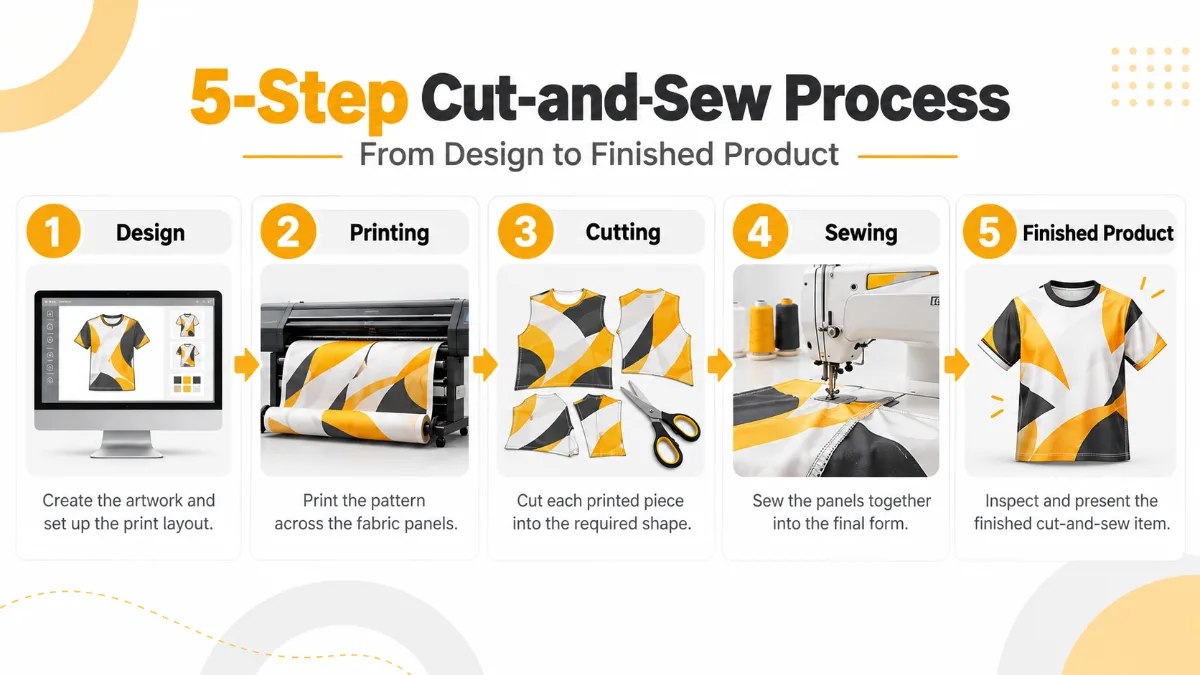
Cut and sew all-over-print is a manufacturing process where fabric is printed before being cut and sewn into a garment. This is fundamentally different from printing on pre-made garments.
The Process (Step by Step)
Step 1: Design Creation
- Create your pattern or design
- Ensure it tiles seamlessly for repeat printing
- Prepare color-separated files for sublimation
Step 2: Fabric Printing
- Roll fabric (not garments) is fed through sublimation printers
- Designs are printed directly onto the fabric roll
- Full-color, edge-to-edge coverage
- Heat-set the ink into the fabric fibers
Step 3: Cutting
- Printed fabric is laid out in multiple layers
- Pattern pieces are cut using precision cutting machines
- Each piece (front, back, sleeves, etc.) is cut separately
Step 4: Sewing
- Cut pieces are sewn together by skilled operators
- Seams are finished cleanly
- Quality control checks at each stage
Step 5: Finishing
- Final pressing and inspection
- Tags, labels, and packaging added
- Ready to ship
Cut and Sew vs. All-Over Sublimation on Pre-Made Garments
| Feature | Cut and Sew | Pre-Made Garment Sublimation |
|---|---|---|
| Print quality | Excellent — fabric lies flat during printing | Good — but wrinkles/seams can cause distortion |
| Durability | Superior — ink bonds with raw fabric | Good — but may fade faster at seams |
| Fit | Custom — garments cut to spec | Generic — pre-made blanks (S/M/L/XL) |
| Seam quality | Clean — sewn after printing | Visible — printed over existing seams |
| Cost | Higher — more labor-intensive | Lower — faster production |
| Best for | Premium brands, custom designs | Quick turnaround, basic designs |
Why Cut and Sew AOP Matters for POD Sellers
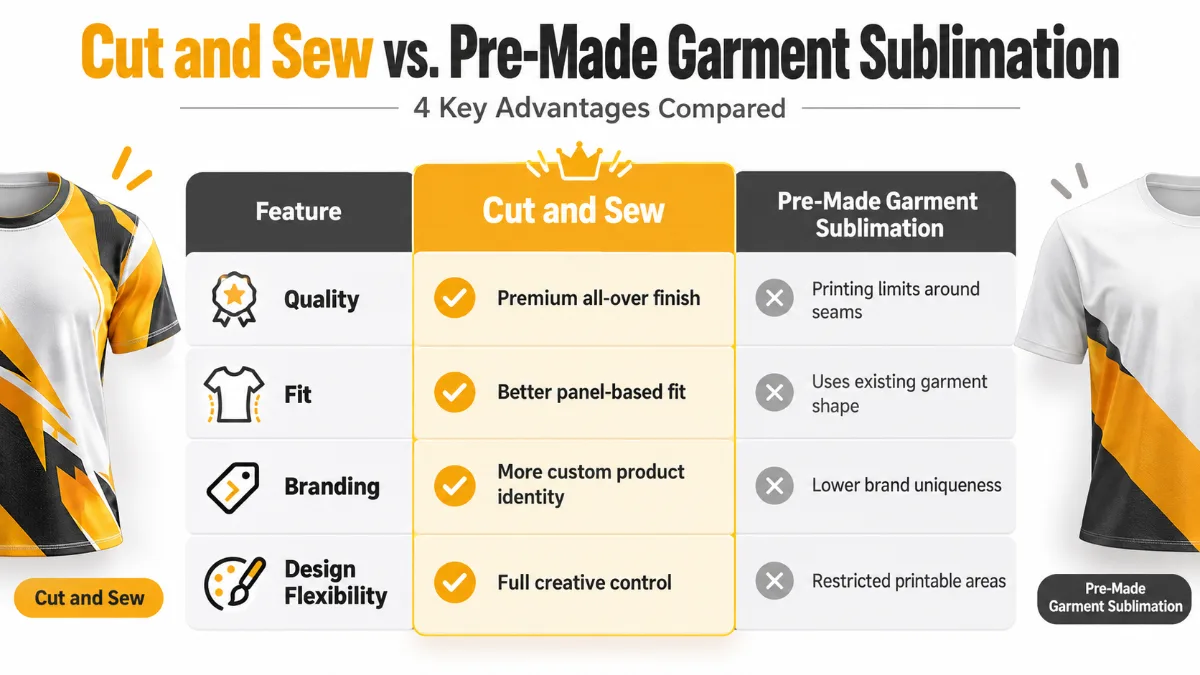
If you're selling AOP products, cut and sew manufacturing gives you a competitive edge:
1. Premium Quality = Premium Pricing
Customers can feel the difference:
- Softer hand feel — ink is in the fabric, not on top
- Better drape — fabric moves naturally
- Vibrant colors — no seam distortion
- Longer lifespan — prints don't crack or fade at seams
This quality justifies higher prices:
- Cut and sew AOP t-shirts: $35-$55 (vs. $25-$35 for basic sublimation)
- Cut and sew AOP hoodies: $70-$110 (vs. $55-$75 for basic sublimation)
- Cut and sew AOP dresses: $60-$95 (vs. $45-$65 for basic sublimation)
2. Better Fit = Fewer Returns
Pre-made garments come in generic sizes (S/M/L/XL) with standard cuts. Cut and sew allows:
- Custom sizing — tailor to your niche's preferences
- Better proportions — garments fit the way they should
- Consistent sizing — every piece is cut to the same spec
Fewer returns = higher profit = happier customers.
3. Brand Credibility
When customers receive a cut and sew garment, they know it's quality:
- Professional finish — clean seams, precise printing
- Attention to detail — patterns match at seams
- Durability — lasts for years, not months
This builds trust and encourages repeat purchases.
4. Design Flexibility
Cut and sew allows for more complex designs:
- Pattern matching — designs align at seams
- Strategic placement — focal elements positioned perfectly
- Mixed materials — combine different fabrics in one garment
- Custom construction — unique cuts and silhouettes
Your designs aren't limited by pre-made garment constraints.
What Products Benefit Most from Cut and Sew AOP?
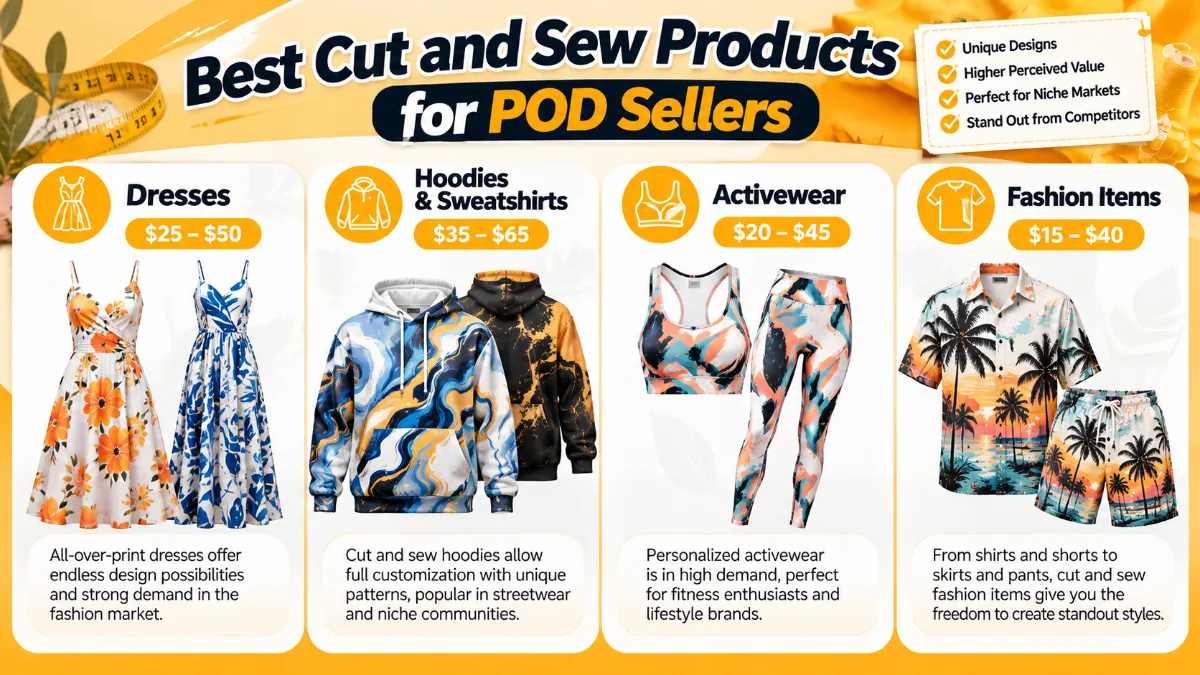
Not all AOP products need cut and sew — but certain categories benefit significantly:
High-Value Apparel (Worth the Investment)
1. Dresses
- Complex construction (bodice, skirt, sleeves)
- Fit is critical for customer satisfaction
- Higher price points justify manufacturing cost
2. Hoodies & Sweatshirts
- Premium product category
- Customers expect quality and durability
- Pattern matching at seams adds perceived value
3. Activewear / Performance Wear
- Fit and comfort are paramount
- Moisture-wicking fabrics require precise construction
- Athletes and fitness enthusiasts recognize quality
4. Fashion-Forward Pieces
- Designer-inspired collections
- Unique silhouettes and cuts
- Limited-edition drops
Products Where Basic Sublimation Is Fine
1. T-Shirts
- Simple construction
- Basic sublimation works well
- Lower price points don't justify cut and sew cost
2. Mugs, Phone Cases, Accessories
- Not apparel — construction method doesn't apply
- Different manufacturing processes entirely
The Sweet Spot
Cut and sew AOP is worth it when:
- Retail price > $50 — customers expect premium quality
- Fit is critical — dresses, activewear, tailored pieces
- Design complexity — pattern matching, strategic placement
- Brand positioning — you're building a premium brand
How to Source Cut and Sew AOP Products
Here's how to find manufacturers and POD suppliers for cut and sew AOP:
POD Suppliers (Easiest, Lowest Risk)
1. Yoycol
- Cut and sew AOP for select product categories
- Integration with Etsy, Shopify
- No minimum order quantities
2. Printify / Printful
- Some cut and sew options available
- Check product details for manufacturing method
- Good for testing before committing to bulk orders
3. JetPrint
- Offers cut and sew for certain apparel
- Verify construction method per product
Custom Manufacturers (Higher Volume, Better Margins)
If you're selling 50+ units per month, consider working directly with manufacturers:
- Alibaba / Global Sources — search "cut and sew sublimation manufacturer"
- Minimum order quantities (MOQs): 50-200 pieces per design
- Lead times: 2-4 weeks production + shipping
- Cost savings: 20-40% lower than POD suppliers
For more on choosing suppliers, see our best all-over-print companies guide.
Pricing Your Cut and Sew AOP Products
Pricing Tiers
| Tier | Retail Price | Base Cost | Profit | Best For |
|---|---|---|---|---|
| Entry | $45–$65 | $18–$28 | $27–$37 | Basic cut and sew tees, tanks |
| Mid | $70–$95 | $28–$40 | $42–$55 | Hoodies, dresses, activewear |
| Premium | $100–$150 | $40–$60 | $60–$90 | Designer pieces, limited editions |
Pricing Strategy
- Educate customers — explain cut and sew benefits in product descriptions
- Show the difference — include close-up photos of seam quality, fabric texture
- Compare to fast fashion — "Our $75 hoodie lasts 5+ years, not 5 months"
- Bundle pricing — "Buy 2 cut and sew pieces, get 10% off"
- Limited edition premium — charge 20-30% more for exclusive designs
For a complete pricing framework, see our how to price POD products guide.
Frequently Asked Questions
What is cut and sew all-over-print? Cut and sew AOP is a manufacturing process where fabric is printed before being cut and sewn into a garment. This results in higher quality, better fit, and more durable prints compared to printing on pre-made garments.
Why is cut and sew better than basic sublimation? Cut and sew offers superior print quality (no seam distortion), better fit (custom sizing), cleaner seams (sewn after printing), and longer lifespan. It's the premium choice for high-value apparel.
Is cut and sew more expensive? Yes, cut and sew is more labor-intensive and costs 20-40% more than basic sublimation. However, the higher quality justifies premium retail prices (often 50-100% higher), so profit margins remain strong.
What products benefit most from cut and sew? Dresses, hoodies, activewear, and fashion-forward pieces benefit most. T-shirts and basic items can use standard sublimation without sacrificing quality.
Can I do cut and sew with print on demand? Yes, some POD suppliers like Yoycol offer cut and sew AOP for select product categories. It's a great way to test the market before committing to bulk manufacturing.
How do I find cut and sew manufacturers? Search Alibaba or Global Sources for "cut and sew sublimation manufacturer." Minimum orders typically start at 50-200 pieces per design.
Does cut and sew take longer to produce? Yes, cut and sew is more time-intensive than basic sublimation. Expect 5-7 business days production (vs. 3-5 days for basic sublimation), plus shipping.
Is cut and sew worth it for small POD sellers? If you're selling premium products at $50+ price points, yes. The quality difference justifies higher prices and builds brand credibility. For basic items under $35, standard sublimation is fine.
Cut and sew all-over-print is the gold standard for premium AOP apparel — superior quality, better fit, longer lifespan, and higher perceived value.
If you're building a premium POD brand or selling high-value products (dresses, hoodies, activewear), cut and sew manufacturing is worth the investment. Your customers will notice the difference — and they'll pay for it.
Ready to start selling premium cut and sew AOP products? Browse Yoycol's cut and sew collection →
This guide is part of our all-over-print product series. Explore our AOP vs DTG guide, best AOP products to sell, or learn what is all-over-print.