To choose polyester fabrics for all-over print (AOP) products, start with fabric construction, then compare GSM and the product’s fit and stretch description. Use your artwork to make the final choice. A polyester percentage tells you the fiber blend; it does not tell you whether a garment will feel like jersey, have an open mesh surface, or include fleece inside.
For print-on-demand sellers and clothing brands, the goal is to choose a fabric that suits both the customer and the design. This guide explains how to compare jersey, mesh, fleece, fabric weight, and stretch, then applies the method to five Yoycol products you can consider for your collection.
Which polyester fabric suits your all-over print product?
Use the intended wearing experience to make the first cut. These are starting points for a shortlist, not guarantees of how every fabric in a category will perform.
| Your product brief | Start by comparing | The deciding question |
|---|---|---|
| An everyday printed top | Polyester jersey in the intended garment fit | Does the finished top provide the coverage and movement your customer expects? |
| A visible-underlayer look | Polyester mesh | Does the artwork work with the open surface and chosen underlayer? |
| A garment with a fleece interior | Fleece-lined polyester options | Does the inner surface and layering fit suit the product brief? |
| A light summer button-up | Lower-weight shirt options in the required cut | Does the drape and coverage work with your actual print? |
1. Choose the fabric surface your customer expects
Before comparing fiber percentages, decide how the garment should be worn. Jersey, mesh, and a fleece inner surface serve different design briefs. Start with that construction choice, then compare the weights and fits available for the product you need.
Jersey or mesh: decide how the top will be worn
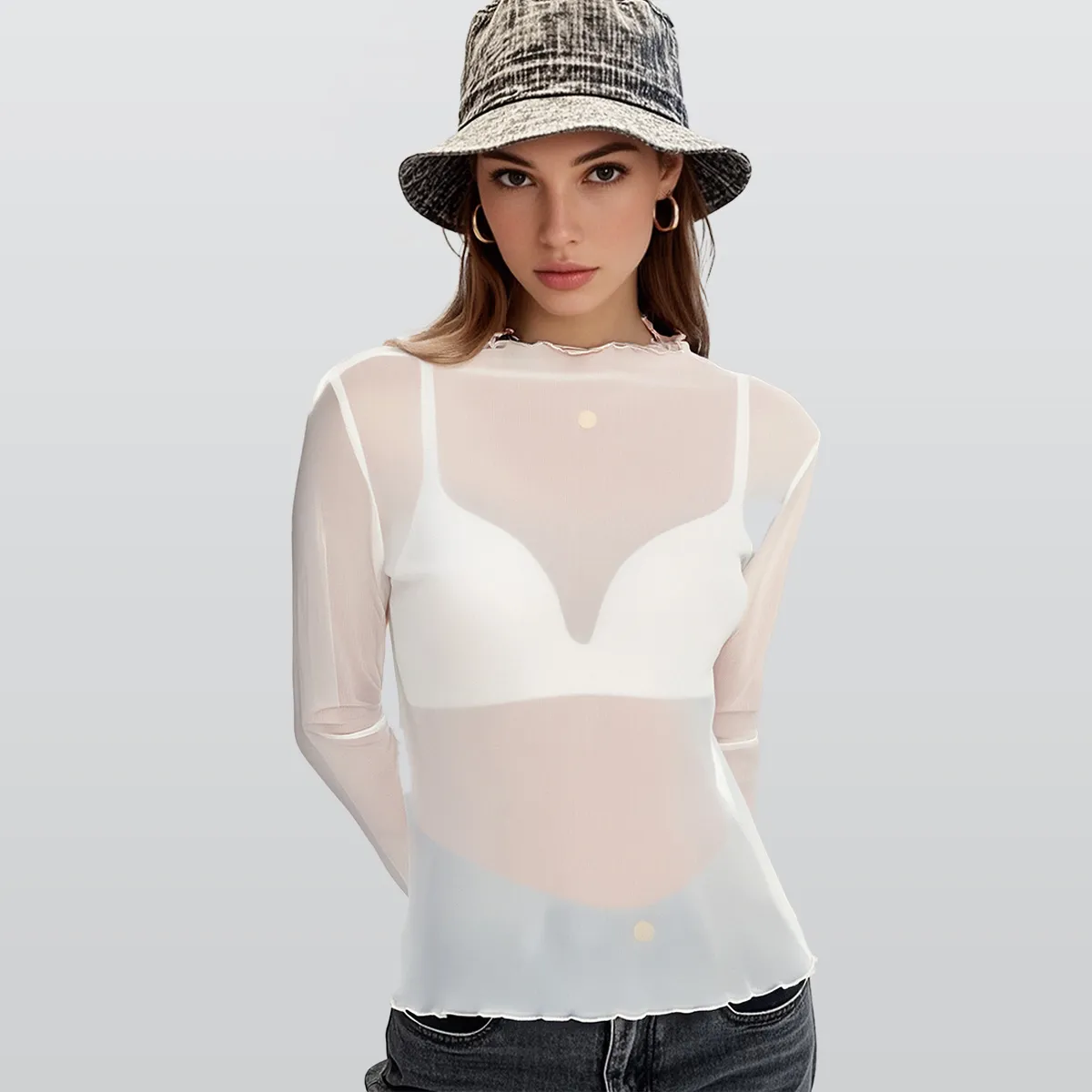
For an everyday printed top, start by comparing jersey options in the cut your audience wants. For a top styled over a visible underlayer, consider mesh. The first decision is whether an open surface belongs in the look; a shared polyester percentage does not make these fabrics interchangeable.
For example, a small illustrated repeat intended to read clearly on a standalone tee is a different brief from an abstract pattern worn over a contrasting camisole. For the second, the underlayer belongs in the design decision and the listing photography. Mesh would be a poor starting point if your offer depends on full coverage without another layer.
Fleece: choose the inside as well as the printed face
For a layering garment, read the inside-fabric description as carefully as the outer face. If the brief calls for fleece against the body or underclothes, shortlist products that explicitly specify a fleece interior. A high GSM value alone does not establish that construction, an insulation rating, or a temperature range.
When developing a matching tee and hoodie, keep the collection’s visual identity but write a separate product description for each. The customer needs to understand what changes against the skin and how the garment is intended to be worn.
2. Use GSM to narrow weight, then consider drape and coverage
GSM means grams per square meter: 180 GSM fabric weighs 180 grams for a one-square-meter piece. It measures fabric mass per area, not the weight of the finished garment. Use it to compare fabric weight; softness, thickness, and opacity are separate questions.
Compare GSM within the same garment use wherever possible. A 120 GSM summer shirt and a 210 GSM polo differ in more than weight: their cuts and blends also matter. Those figures alone cannot tell you which hangs more fluidly, feels softer, or looks more opaque in your design.
Make the weight decision within the intended use. If you are selling a vacation button-up, shortlist the shirt and assess its drape. If you need a polo for a coordinated casual range, begin with the polo silhouette. Moving up in GSM does not automatically improve either product.

A pale design creates a specific question: does the finished garment provide the coverage your listing promises? Decide whether it must be worn alone, then assess it that way. A dark catalog image or a fabric-weight figure cannot answer that question for a pale printed garment.
3. Read the stretch description before choosing the size
Do not turn a spandex percentage into a stretch promise. Our Hawaiian shirt listing specifies 95% polyester and 5% spandex, yet also describes the product as nonelastic. For that style, allow for movement through the size and cut; do not size down on the assumption that the blend will stretch to fit.
The polo lists 12% spandex, but this is not a measured stretch or recovery rate. It also does not establish compression performance. Use the size chart and the product’s fit description to select a candidate size, then assess ordinary movements such as reaching forward and sitting.
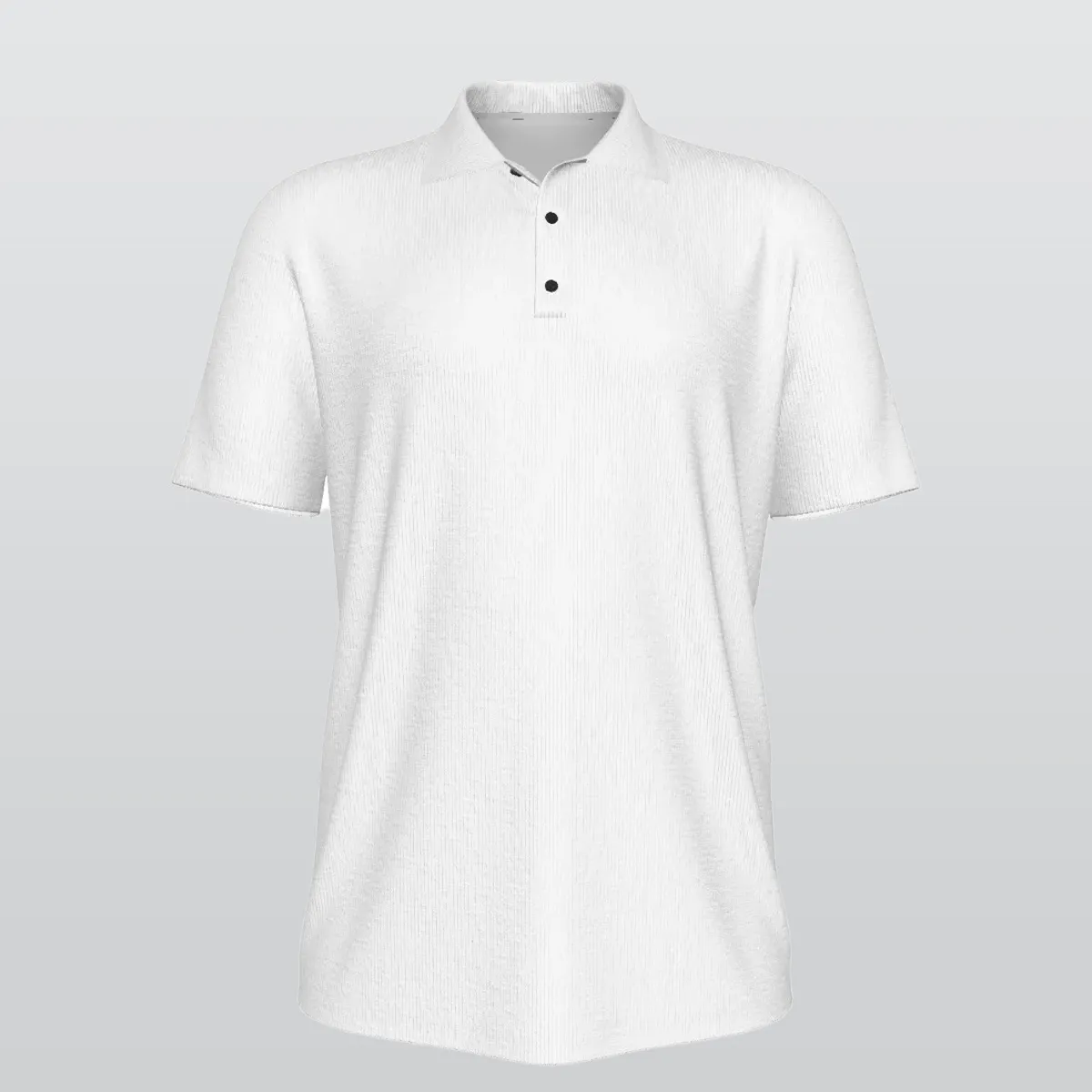
For a fitted printed top, consider the artwork at the same time. If a recognizable face or circular motif must keep its shape, avoid placing it where the intended fit pulls it strongly during wear. A different size, cut, or placement may solve the problem more directly than changing the fiber blend.
4. Match the fabric and garment to your AOP artwork
AOP describes print coverage. Our polyester sublimation guide explains the heat-transfer process used for the polyester printing route discussed here. The finished appearance still needs to be considered on the selected surface and garment.
Use these priorities when adapting your design:
- Fine details and text: give essential elements enough room to remain readable at the intended print size. On mesh, assess them with the intended underlayer rather than on a white digital background alone.
- Large motifs: position faces, logos, and other focal points within a panel where possible. Button openings and seams should not divide an element that needs to remain whole.
- A matching collection: retain reference colors and motifs, but adjust scale and placement for each garment. A shirt approval does not establish the appearance of the same file on a hoodie.
Follow our AOP design template guide using the template for the exact product. For a botanical shirt-and-hoodie set, for example, plan the shirt around its front opening and collar, then position the hoodie artwork around its hood, sleeves, and body panels. Compare the finished pieces together before presenting them as a coordinated set.
Apply the fabric checklist: five Yoycol product examples
Once you have chosen a construction, weight range, and fit, compare actual listings. These five Yoycol examples show how the checklist applies to current products; they are not a ranking of all polyester fabrics. Choose within the material options offered on each listing.
| Product and fabric | Fabric / blend | Fabric weight | What to base your choice on |
|---|---|---|---|
| Men’s Hawaiian Shirt With Button Closure | 95% polyester / 5% spandex; listed as nonelastic | 120 g/m² | Low fabric weight and a button-front cut for a summer shirt brief. |
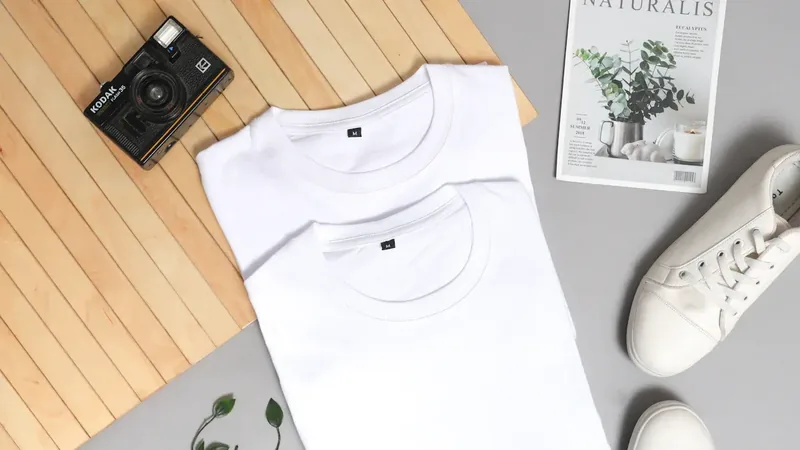
| Round Neck T-Shirt | Jersey; 95% polyester / 5% spandex | 180 g/m² | Jersey construction and a regular-fit, feminine round-neck cut. |
| Men’s Heavyweight Polyester Polo Shirt | 88% polyester / 12% spandex | 210 g/m² | A polo silhouette; compare its size chart and fit before relying on stretch. |
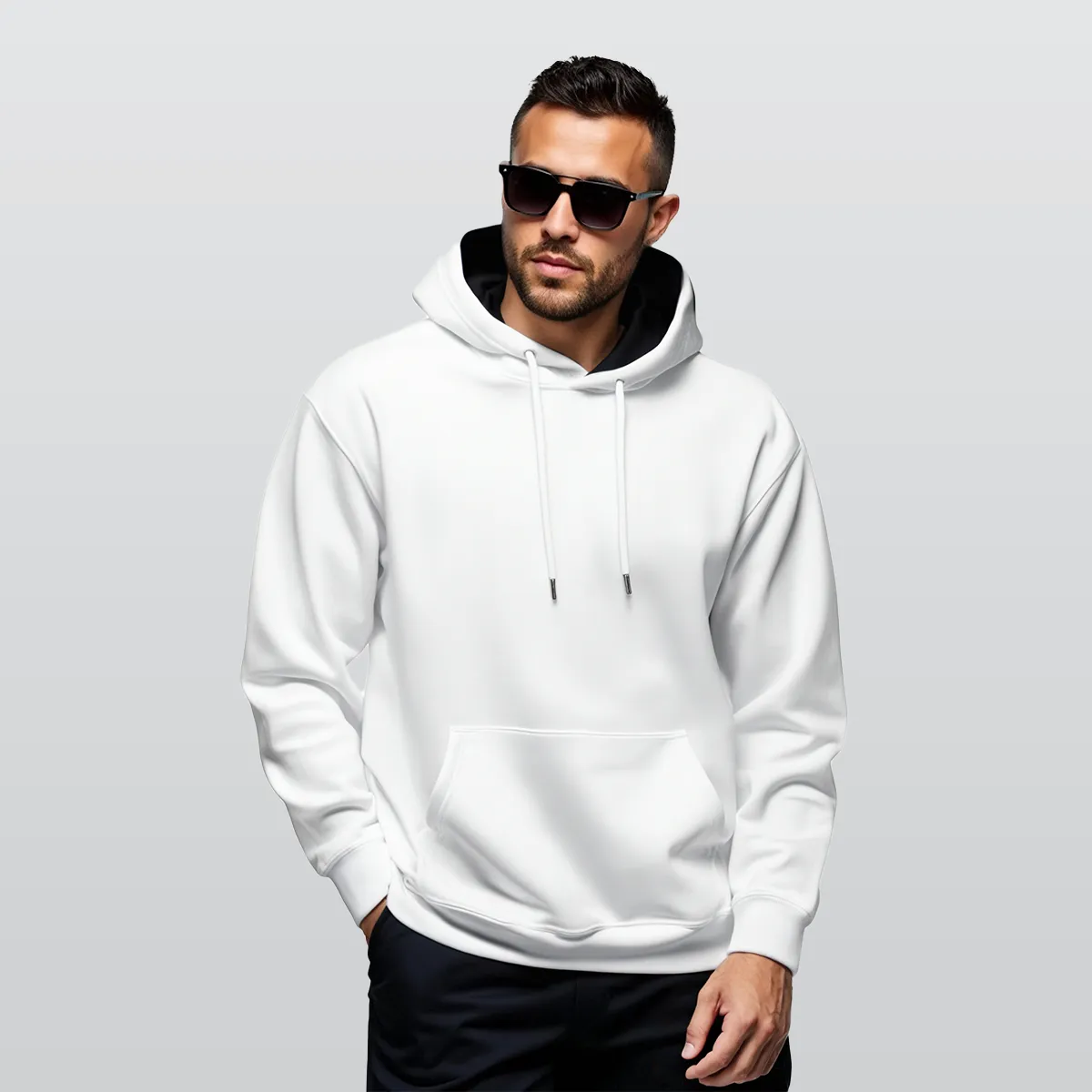
| Men’s Thicken Pullover Hoodie | Fleece inner layer; 95% polyester / 5% spandex | 320 g/m² | An inner fleece surface for a layered outfit. |
| Women’s Mesh T-shirt | Mesh; 95% polyester / 5% spandex | Not specified | An open-texture, skinny-fit top where the underlayer is part of the look. |
The mesh top’s fabric weight is not specified. If GSM is essential to your brief, ask our team to confirm it; a finished garment weight in kilograms cannot fill that gap.
Turn your shortlist into a sample decision
Once the specifications have narrowed your choice, use a sample to resolve the questions the listing cannot answer. Choose a few acceptance criteria before ordering so the result leads to a clear decision.
- Write the product promise. For example: “A pale summer shirt worn on its own,” or “A patterned mesh top styled over a black camisole.” This determines how to judge coverage and appearance.
- Print the details that matter. Include your actual pale areas, dark colors, and smallest important motifs. Assess the chosen size during normal wear, with the intended underlayer if applicable.
- Record the result. Photograph the front, back, and one fabric close-up in consistent lighting. Note whether to keep the product, change the size or artwork, or try a different material.
- Follow the product’s care instructions. Compare fit and appearance after washing and drying as directed. Keep those notes with the product code and design file for future reference.
Your approved sample can then support both the design decision and your listing photos. Describe the actual blend, fit, and care instructions; add performance claims only when you have evidence for that specific product.
Frequently asked questions
Does higher GSM mean a polyester fabric is less see-through?
GSM alone cannot establish opacity. It measures fabric weight per area, while coverage also depends on the fabric construction and how the finished garment is worn. For a pale design sold as a standalone top, assess that exact print and size without an underlayer before describing the coverage.
Does polyester fabric for AOP have to be 100% polyester?
Not necessarily. The Yoycol examples here use polyester–spandex blends and are offered as AOP products. For any supplier, check the printing method and the fabric specified for the exact item. These examples do not establish that every polyester blend works with every printing process.
Can I choose a different fabric for the same product?
Use the options available on that product’s listing. If the weight or construction you need is not offered, compare another product or ask our team about availability before preparing the design. A fabric used on one catalog style is not automatically interchangeable with another.
Start with the product that fits your brief
Write down the surface, weight, fit, and design requirements your customer will care about, then use the comparison above to choose your starting product. Open its linked page, check the size and print guides, and prepare a sample of your own artwork. That gives you a concrete basis for building the listing and extending the collection.